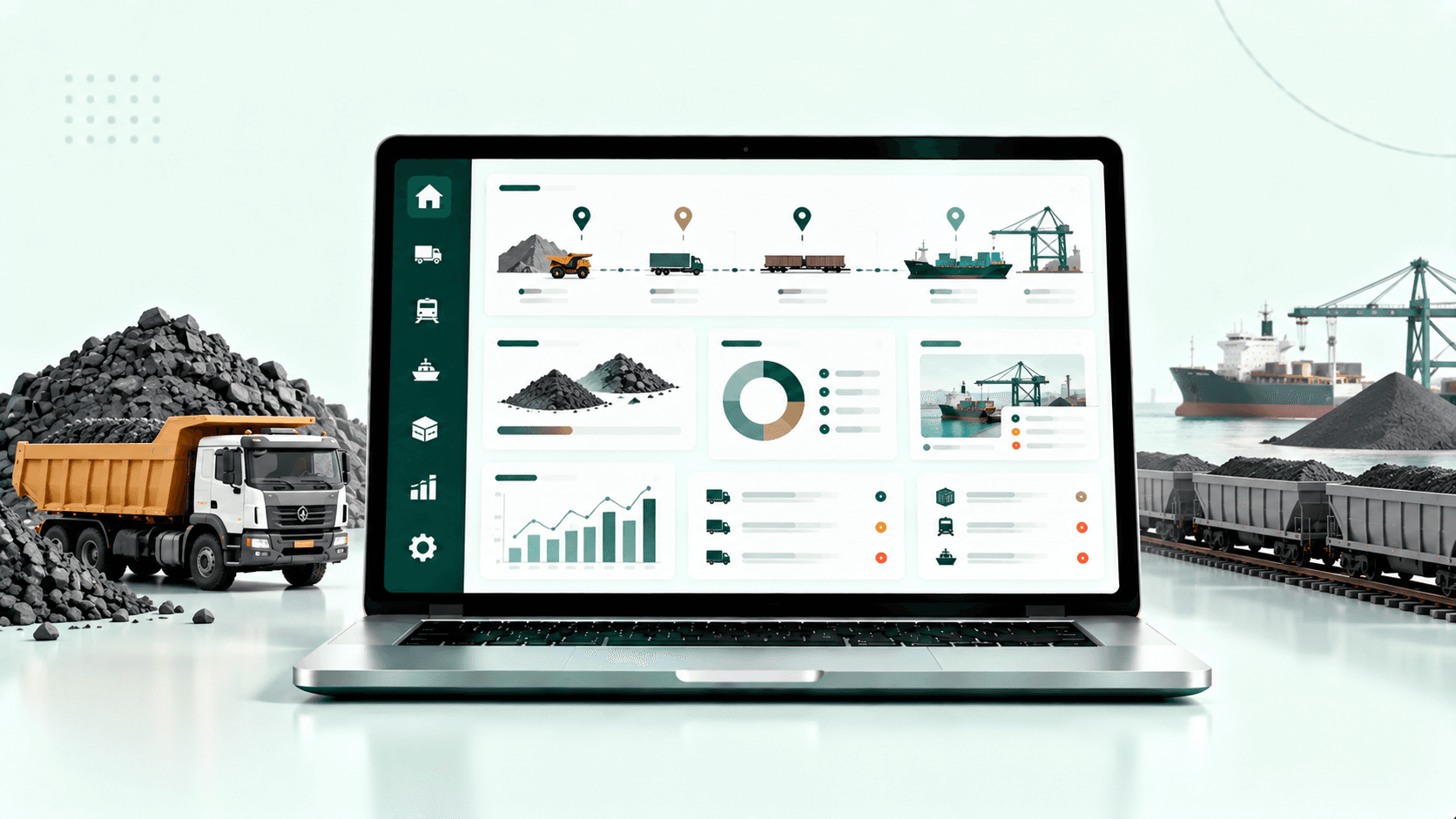
Mineral Supply Chain & Logistics Automation Platform
Manage your entire mineral supply chain with mining logistics software. Automate dispatch, shipment tracking, stockyard operations, port coordination, delivery management, and logistics cost control from one platform.
Complete visibility across the mining supply chain
Higher on time shipment performance
Reduced transportation and demurrage costs
Improved transporter coordination and operational efficiency
Faster response to logistics disruptions
Scalable mining logistics operations that support business growth
Results depend on scope, integrations and adoption.
The operating context
A clearer view of the whole operation.
Mining operations depend on efficient logistics to move minerals from extraction sites to processing plants, stockyards, ports, and customers. Every shipment involves multiple stakeholders, transport modes, and operational handoffs that must remain synchronized. As shipment volumes grow, manual coordination becomes increasingly difficult, resulting in delays, limited visibility, higher logistics costs, and operational inefficiencies.
Modern mining logistics software connects every stage of the mineral supply chain into one digital platform. By integrating dispatch planning, transport tracking, inventory visibility, port operations, and customer deliveries, organizations gain complete operational control while reducing delays, improving coordination, and lowering transportation costs.
Where friction builds
Mining logistics becomes inefficient without real time supply chain visibility
Many mining companies still manage dispatch schedules using spreadsheets while transport coordination relies on phone calls, emails, and disconnected applications. Shipment locations often become unclear after leaving the mine, making it difficult for operations teams to anticipate delays or respond quickly.
Stockyard inventory, transport fleets, railway schedules, and port activities frequently operate as isolated systems with limited data sharing. Operational disruptions such as vehicle breakdowns, traffic congestion, loading delays, or vessel schedule changes are discovered too late, increasing demurrage charges, missed delivery commitments, and unnecessary logistics expenses. Without integrated mining logistics software, organizations struggle to optimize routes, improve transporter performance, maintain inventory accuracy, and scale logistics operations efficiently.
Current approach
Manage mining dispatch through spreadsheets
Track shipments through calls and messaging
Use separate transport and inventory systems
Review logistics performance through delayed reports
Operational impact
No end-to-end logistics visibility
Shipment updates arrive too late
Demurrage and transport costs increase
Disconnected systems slow operational decisions
Inside the solution
The capabilities behind the operation.
Review the functional scope, then discuss the requirements specific to your team.
Dispatch and Shipment Planning
Plan dispatch based on production schedules, order priorities, routes, and transport capacity.
Multi-Leg Transport Tracking
Track road, rail, and sea movements with real-time status updates and exception alerts.
Stockyard and Port Coordination
Provide visibility into yard inventory, gate operations, and vessel or loading schedules.
Order and Delivery Management
Link customer orders with dispatch and track deliveries with proof of completion and updates.
Cost and Demurrage Visibility
Monitor freight costs, turnaround times, and delay-related penalties to improve cost control.
Partner and System Integration
Integrate fleet systems, port platforms, and ERP systems through secure APIs.
Analyze the complete mining logistics workflow from production to customer delivery
02
Design digital workflows for dispatch, transportation, stockyard operations, and port coordination
03
Implement real time shipment tracking and automated exception management
04
Integrate ERP, GPS, transport, inventory, and customer systems
05
Provide dashboards and analytics for continuous logistics optimization
Our approach
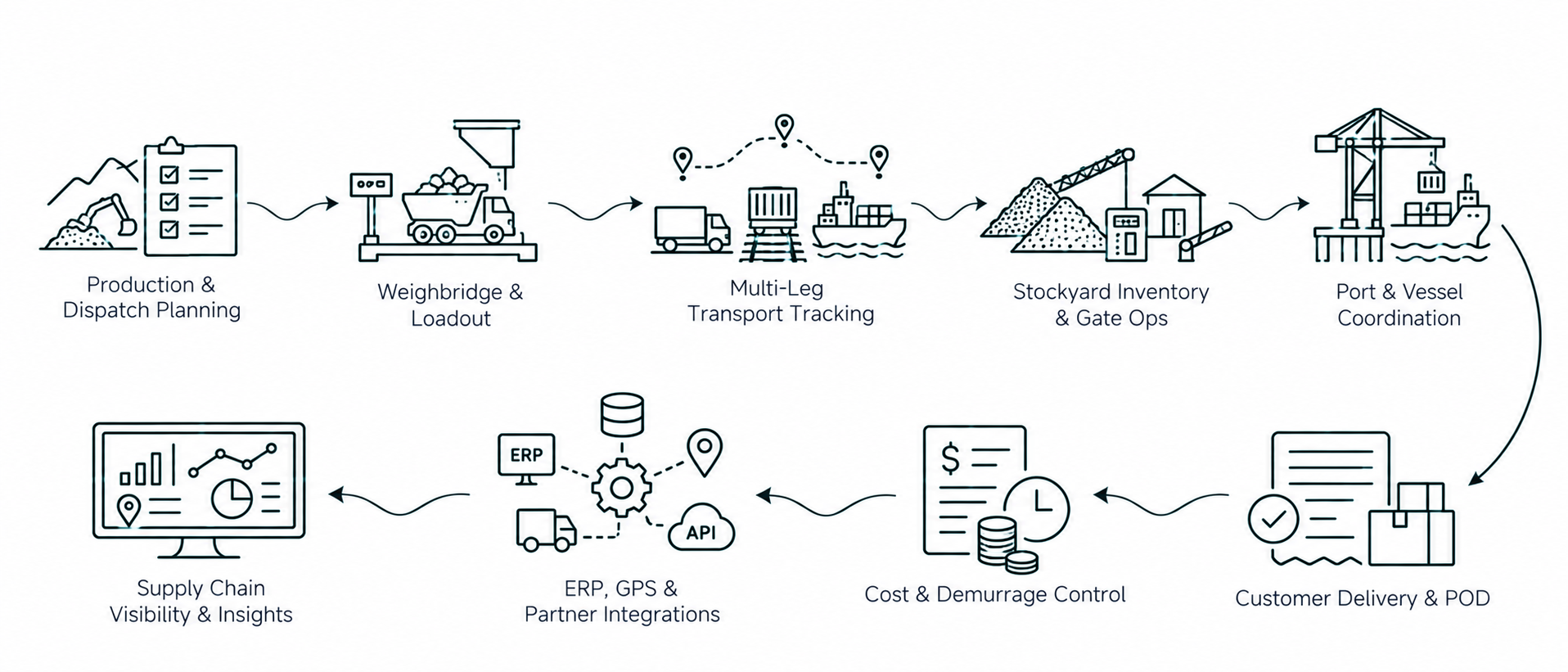
We build mining logistics software around real operational workflows used by mining companies, mineral exporters, and bulk commodity suppliers. Our platforms connect production planning, dispatch operations, transportation, stockyard management, port coordination, and customer deliveries into one integrated system.
How it connects
The complete workflow, in one view.
Make an informed decision
Is this the right fit?
The right solution starts with the right operating requirements.
Mining logistics software is a digital platform that manages mineral transportation, dispatch, shipment tracking, stockyard operations, and delivery from mine to customer. It improves visibility, coordination, and operational efficiency across the entire supply chain.
How does mining logistics software reduce transportation costs?
The software optimizes dispatch planning, tracks shipments in real time, minimizes delays, and identifies bottlenecks before they become costly. This helps reduce demurrage, idle time, fuel waste, and overall logistics expenses.
Can mining logistics software integrate with ERP and GPS systems?
Yes. Modern mining logistics platforms integrate with ERP, fleet management, GPS tracking, weighbridges, port systems, and other operational applications through secure APIs for seamless data exchange.
Does mining logistics software support road, rail, and sea transportation?
Yes. It supports multi modal logistics by providing end to end visibility across road, rail, and maritime transport while tracking shipment status and managing exceptions throughout the journey.
What are the benefits of automating a mineral supply chain?
Automation improves shipment visibility, speeds up dispatch coordination, reduces manual work, lowers logistics costs, and enables faster, data driven decisions. It also helps mining companies scale operations while maintaining reliable deliveries.
Start with your requirements
Let’s define your next step.
Tell us what needs to work better, the systems you use, and the scope you have in mind.