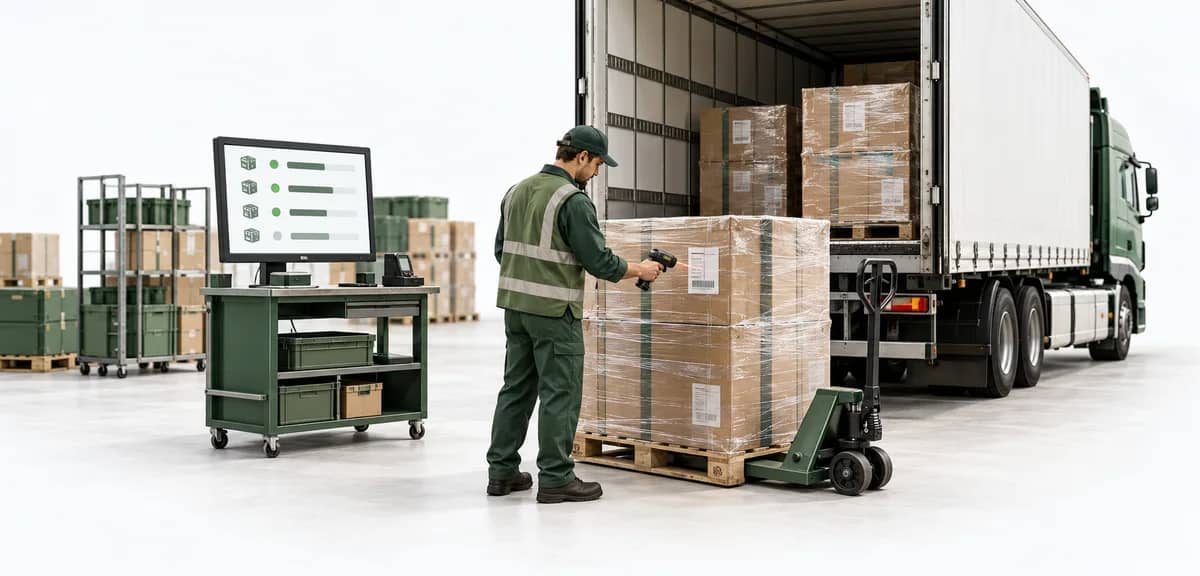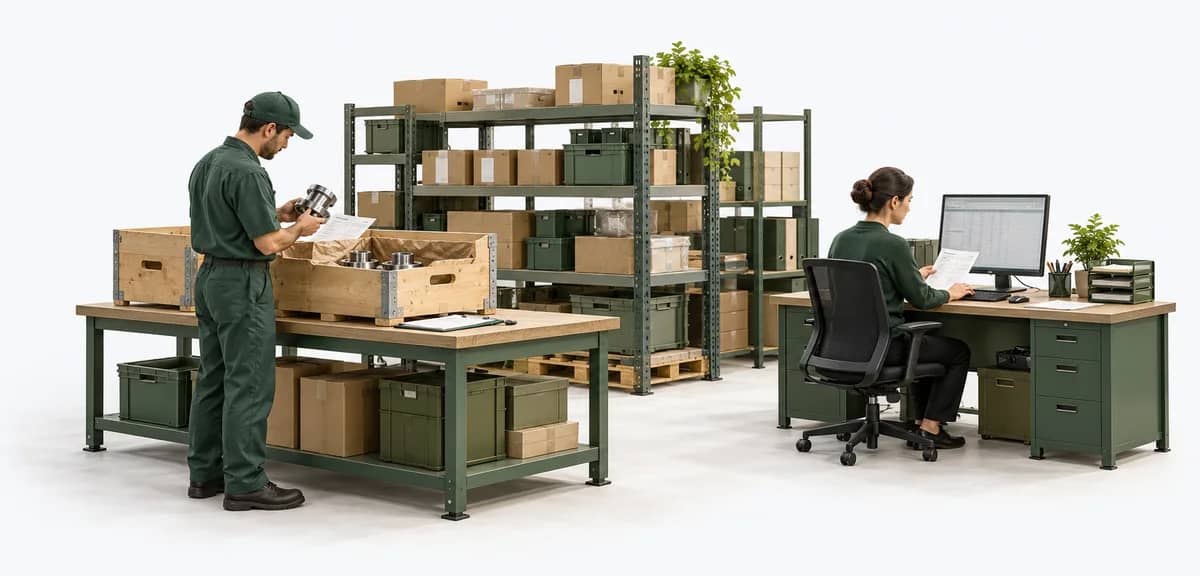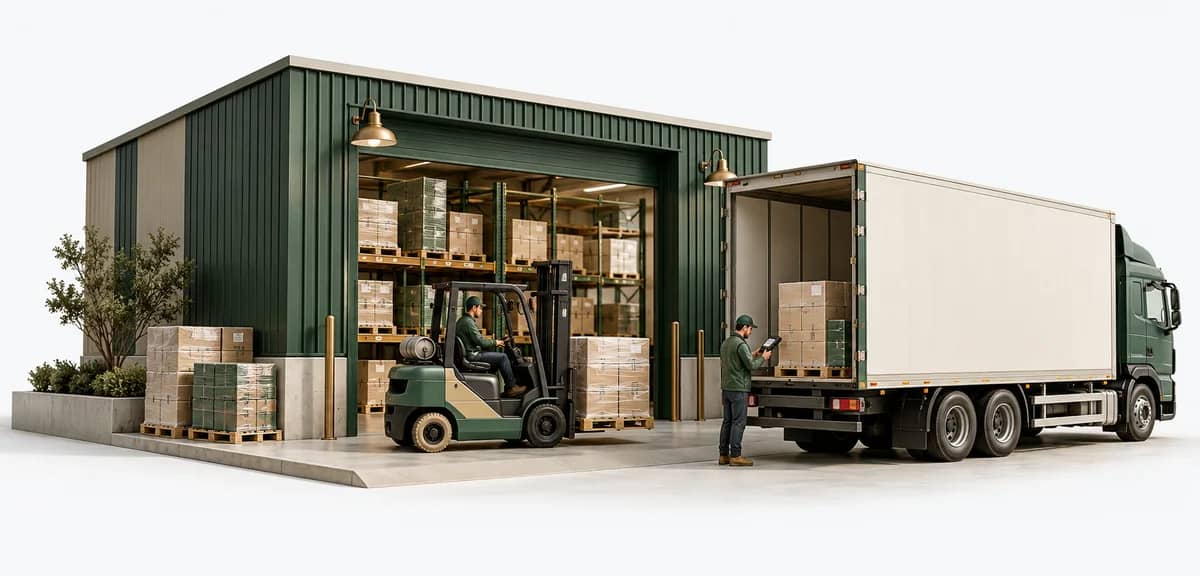
Keep every shipment on the promise you sold.

We build logistics software so planning, warehouse, carriers, and customer service work from the same order. Not three spreadsheets.

Who this is for3PL & contract logisticsFreight forwardersDistribution networks

Inside logistics & supply chain

Follow the shipment, not just the truck.

A logistics network stretches across warehouses, carriers, and customer teams. The important questions live between those organizations: what left, what arrived, and who handles the exception?

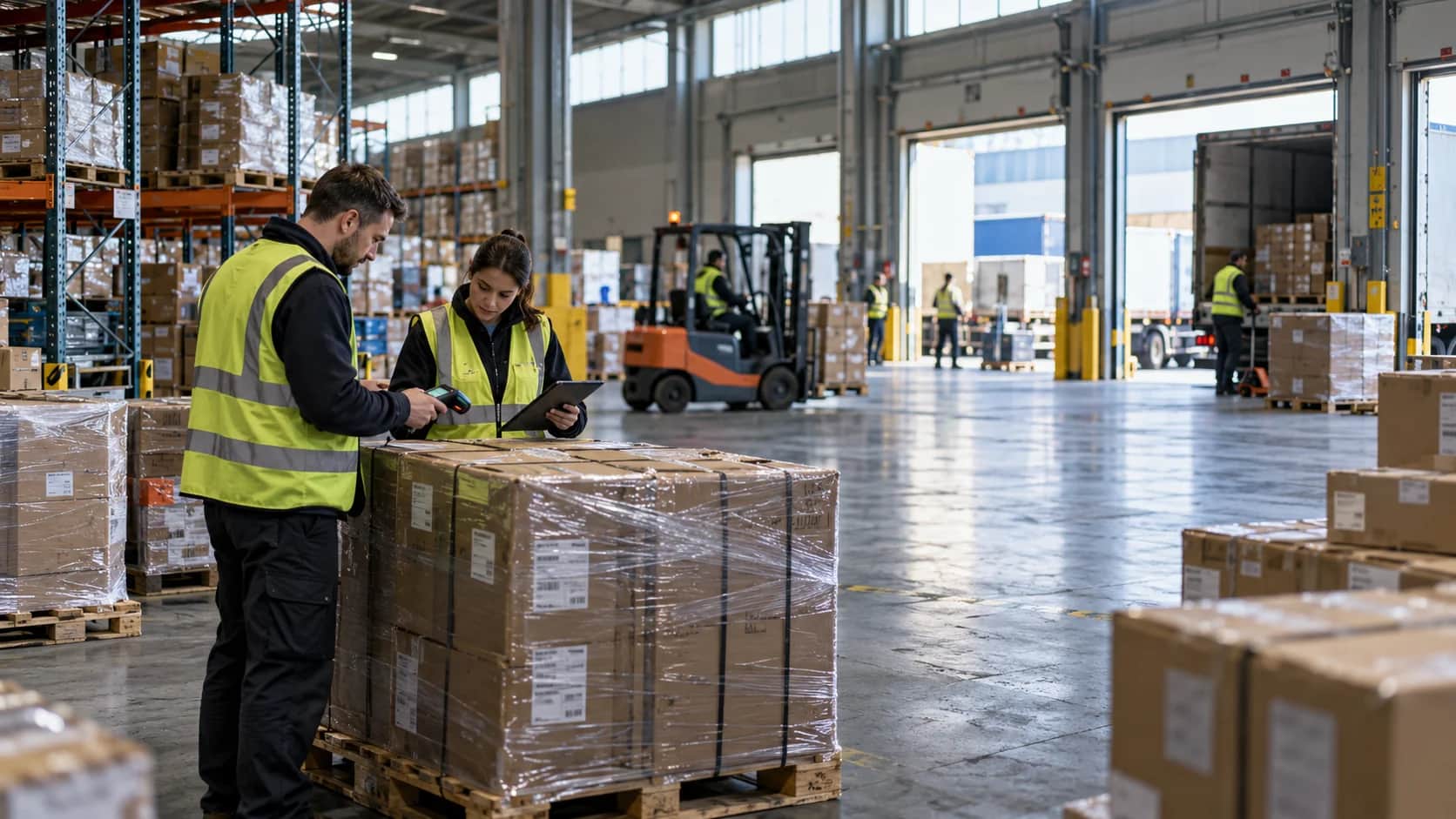
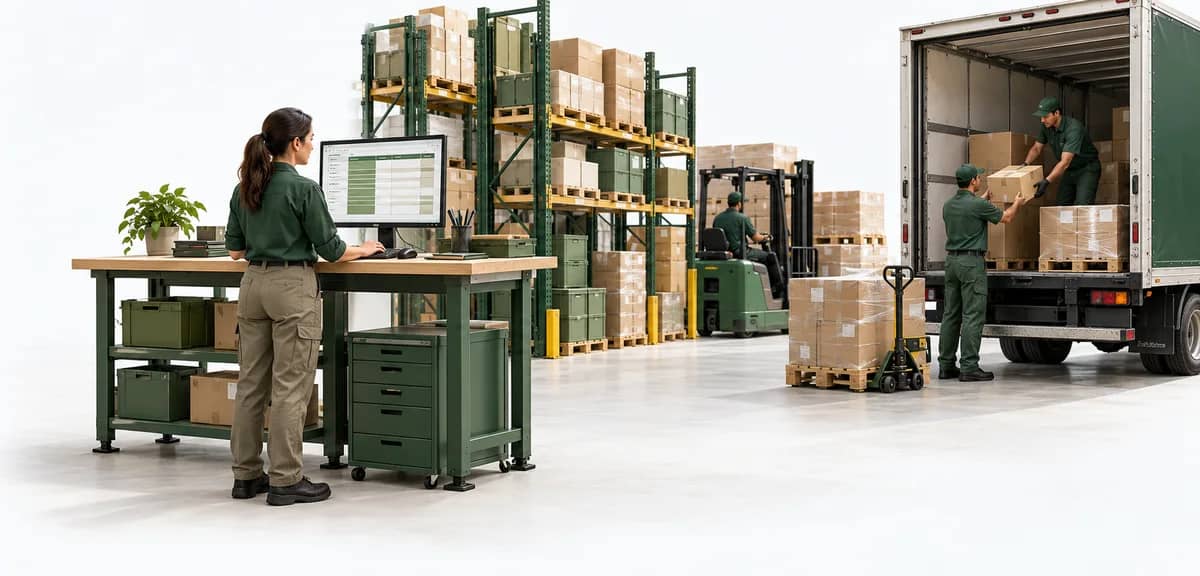
Warehouse staff scanning and checking palletized shipments

In practice

A shipment misses its connection.

The warehouse has released it. The carrier has changed the arrival time. Customer service still has the original promise. Start with that disagreement: which event should update the order, and who owns the recovery?

Industry context: GS1 traceability
02 / Operating priorities

The handoffs that shape a logistics network.

One order across warehouse and last mile

3PL operations and customer service

Keep pick, dispatch, and delivery status on a single shipment so service never has to reconstruct the story.

Exception desk before the next cut-off

Network control and account teams

Surface at-risk orders with an owner and a recovery action before the customer calls.

Partner onboarding without new chaos

Carrier and site onboarding teams

Give new warehouses and carriers shared identifiers, milestones, and document rules from day one.

Cost-to-serve that finance can defend

Commercial and finance leads

Tie expedites, rework, and failed deliveries back to the account that caused them.

03 / People in the operation

One shipment. Several teams responsible for it.

Give each team the information and tools they need to do their part.

01

Operations leaders

Cut-off risk, exception queues, and a shared next action across sites.

02

Customer service

A status they can tell the customer, with evidence, not a guess.

03

Finance teams

Activity and cost tied to the same shipment that operations ran.

04 / Where we can help

Software we build for logistics & supply chain.

Explore the capabilities below to see the workflows and features we can build around your operation.

What’s included

Warehouse management

Receiving, slotting, picking, packing, and inventory counts in one warehouse operation, built around your layout and labour model.

  • Inbound ASN and putaway
  • Wave, batch, and zone picking
  • Cycle counts and inventory accuracy
  • Pack, label, and dock release
Discuss this capability

05 / How it connects

Fits the systems you already run.

We connect the systems that already hold orders, inventory, and carrier events. Replacement is a last resort.

Systems we typically connect

  • ERP and order systems
  • WMS and inventory
  • Carriers and EDI/API partners
  • Customer portals

Designed into the build

  • Partner access by role
  • Audit trail on status changes
  • Document retention for claims

06 / AI in this industry

Useful on one job first.

We apply AI to a task your team already owns. A person still reviews anything that changes money, safety, or a customer promise.

Explore AI Services
Application 01

Classify incoming shipment documents

Extract references and flag missing fields for an operator to verify.

Application 02

Prioritize service exceptions

Rank issues against customer promises; dispatch retains recovery decisions.

Want this scoped to your operation?

Discuss your requirements

Questions

Before you write to us.

How does AI help logistics teams improve delivery performance?

AI can continuously evaluate routes, constraints, and live signals to improve dispatch decisions and reduce missed SLAs, fuel waste, and avoidable delays.

Can AI support exception management in logistics?

Yes. AI can detect disruption patterns early and route exceptions to the right operators with suggested actions, so teams respond faster and with more consistency.

Do you integrate logistics software with existing ERP and warehouse systems?

Yes. We integrate with ERP, WMS, TMS, and partner APIs to keep planning, execution, and reporting synchronized without replacing your full stack.

What is a practical rollout approach for logistics modernization?

We typically start with one workflow such as dispatch or tracking visibility, measure operational impact, and then expand in phased releases.

What is custom logistics software versus off-the-shelf TMS or WMS?

Packages cover common flows; custom software wins when your differentiation is in partner rules, pricing logic, multi-leg orchestration, or regulated documentation. We often extend commercial anchors with bespoke services, portals, and automation rather than rip-and-replace.

Can you connect our operations to a broader supply chain visibility initiative?

Yes. We feed canonical events into visibility layers and customer portals, and align milestones with finance triggers. See our supply chain visibility platform service for the full playbook.

Start with your requirements

Let’s define your next step.

Tell us what needs to work better in logistics & supply chain, the systems you use, and the scope you have in mind.

Discuss your requirementsShare your requirements through our enquiry form.

The technology behind the work.

Explore our approach to backend, web, mobile and AI engineering.

Explore our technologies

Selected work

Complex operations.
Thoughtfully engineered.

A little closer, wherever you are

Big world.
Close partnership.

Product engineering, AI and Odoo ERP, with a shared plan and a working rhythm built around your team.

IndiaSpainFrance
Our offices Customer presence

Different time zones. One shared vision.

Explore our global presence

Featured blogs

Technology, automation, AI, and how digital products actually get built.

‌
‌
‌
‌
‌
‌
‌
‌
‌
‌
‌
‌