Results depend on scope, integrations and adoption.
The operating context
A clearer view of the whole operation.
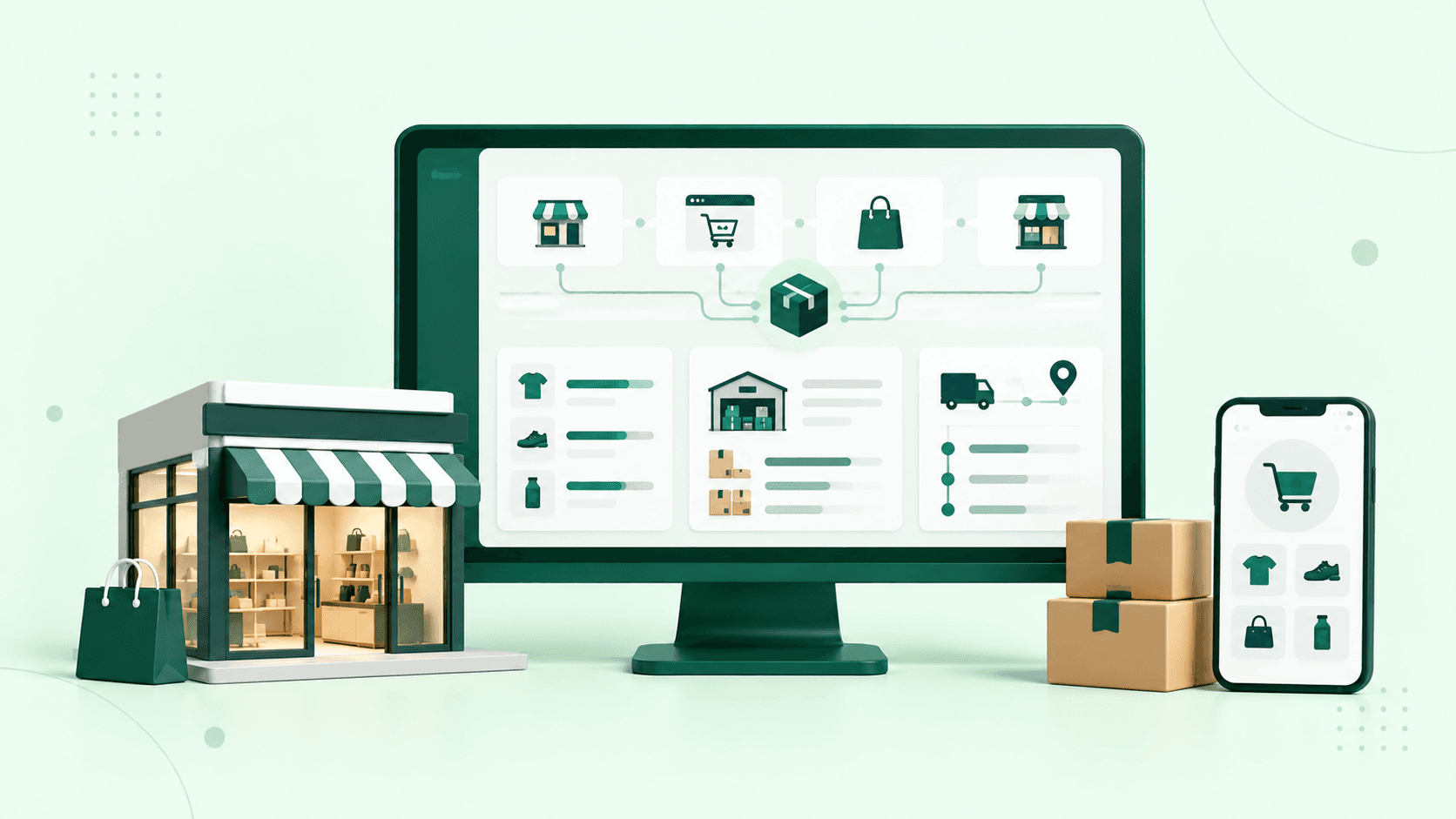
Modern retailers sell through physical stores, eCommerce websites, mobile applications, social commerce, and online marketplaces. Managing each sales channel independently creates operational inefficiencies and inconsistent customer experiences. An Odoo Omnichannel Retail Solution centralizes inventory, orders, pricing, customer data, and fulfillment workflows into one ERP, giving retailers a unified view of operations while supporting scalable growth across every sales channel.
Where friction builds
Retail growth slows when every sales channel operates as a separate business.
Retailers often manage inventory, pricing, customer records, and orders in different systems, causing stock inaccuracies, delayed fulfillment, inconsistent promotions, and poor visibility across channels.
As sales channels expand, manual synchronization becomes unsustainable, limiting customer experience, operational efficiency, and business growth.
Current approach
Run POS and eCommerce separately
Update inventory across channels manually
Manage marketplace orders independently
Maintain separate customer records
Operational impact
Inventory becomes inconsistent across channels
Fulfillment decisions become slower
Customer experiences remain fragmented
Retail performance lacks one view
Inside the solution
The capabilities behind the operation.
Review the functional scope, then discuss the requirements specific to your team.
Unified Inventory Synchronization
Maintain accurate stock visibility across stores, warehouses, websites, and marketplaces through real time inventory updates.
Integrated POS and eCommerce
Connect physical stores with online sales channels using a single retail management platform.
Centralized Order Management
Manage orders from websites, marketplaces, and retail stores within one operational workflow.
Omnichannel Customer Experience
Create unified customer profiles with shared purchase history, loyalty programs, promotions, and personalized engagement.
Flexible Fulfillment Operations
Support click and collect, ship from store, home delivery, warehouse fulfillment, and store transfers.
Retail Performance Analytics
Monitor sales, inventory, customer behavior, profitability, and channel performance through centralized dashboards.
Every retailer operates with unique sales channels, fulfillment models, warehouse structures, and customer engagement strategies. At PySquad, we analyze your complete retail workflow before configuring Odoo. We integrate POS, eCommerce platforms, marketplaces, payment systems, logistics providers, and ERP modules into a single operational ecosystem. The result is an implementation designed around your business rather than forcing your operations to fit generic software.
How it connects
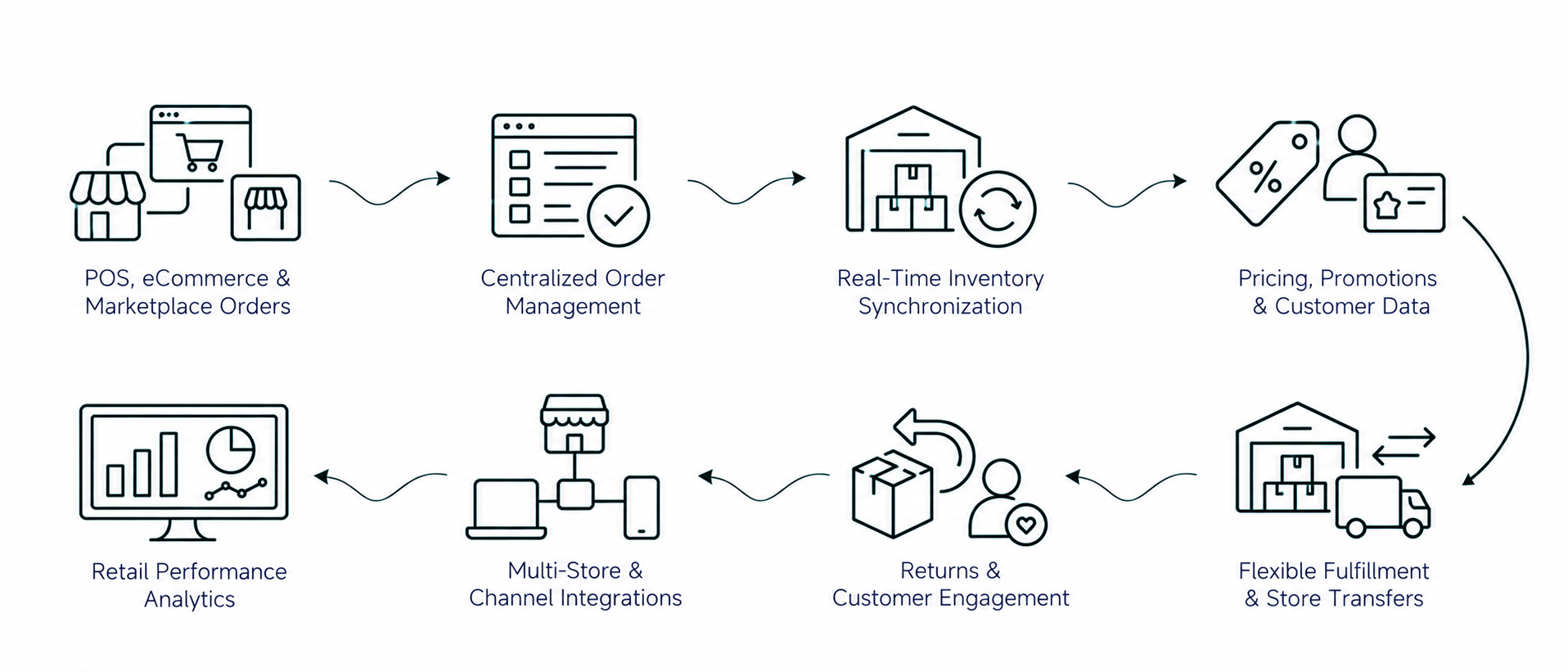
The complete workflow, in one view.
Make an informed decision
Is this the right fit?
The right solution starts with the right operating requirements.
An Odoo Omnichannel Retail Solution connects physical stores, eCommerce websites, marketplaces, inventory, CRM, and fulfillment into one ERP platform. Instead of managing separate systems, retailers operate from a centralized environment with synchronized inventory, customer data, pricing, and orders across every sales channel.
Can Odoo integrate with online marketplaces and eCommerce platforms?
Yes. Odoo can integrate with marketplaces such as Amazon, eBay, and other supported platforms, as well as eCommerce websites and payment gateways. Integration enables automated order synchronization, inventory updates, pricing management, and centralized retail operations while reducing manual work.
Does Odoo support click and collect and ship from store?
Yes. Odoo supports multiple fulfillment models including click and collect, ship from store, warehouse fulfillment, home delivery, and store transfers. These workflows can be configured based on inventory availability, customer location, and operational requirements to improve delivery efficiency.
How long does it take to implement an Odoo Omnichannel Retail Solution?
Implementation timelines depend on the number of stores, integrations, warehouses, custom workflows, and data migration requirements. A standard implementation may take several weeks, while enterprise retail projects involving multiple systems and custom processes typically require a phased deployment approach.
Why choose a customized Odoo implementation instead of using standard retail modules?
Standard modules cover common retail processes, but growing businesses often require custom pricing rules, fulfillment logic, loyalty programs, marketplace integrations, reporting, and operational workflows. A customized implementation ensures Odoo reflects your existing retail operations while remaining scalable as your business expands.
Start with your requirements
Let’s define your next step.
Tell us what needs to work better, the systems you use, and the scope you have in mind.