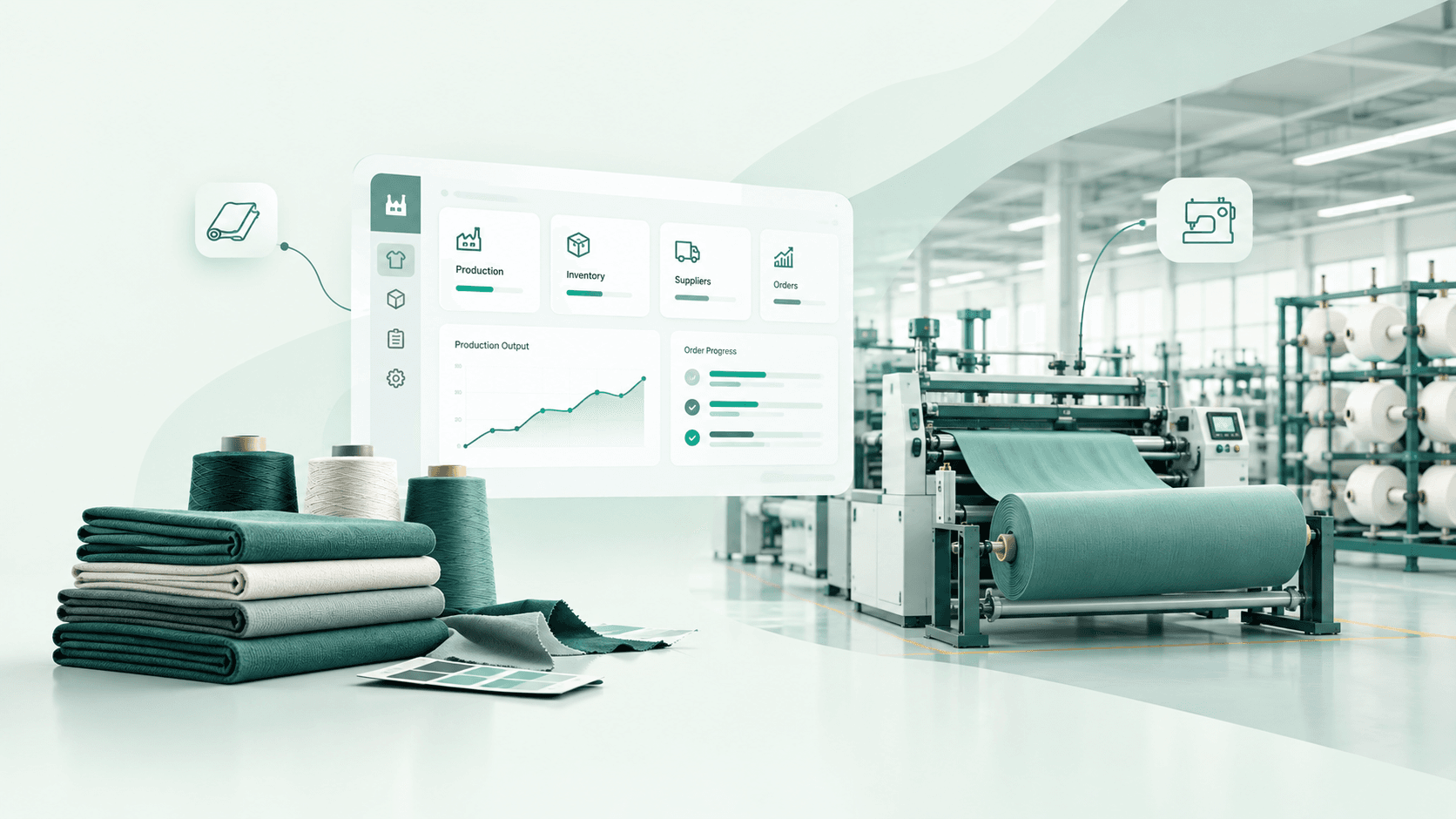
Manage fabric sourcing, production planning, cutting, stitching, finishing, and order tracking with PySquad’s Odoo-based Textile and Garment Manufacturing ERP.
Reduced fabric wastage and improved material utilization
Better coordination across production stages and teams
Faster order fulfilment and reliable delivery timelines
Improved quality control and profitability visibility
Results depend on scope, integrations and adoption.
The operating context
A clearer view of the whole operation.
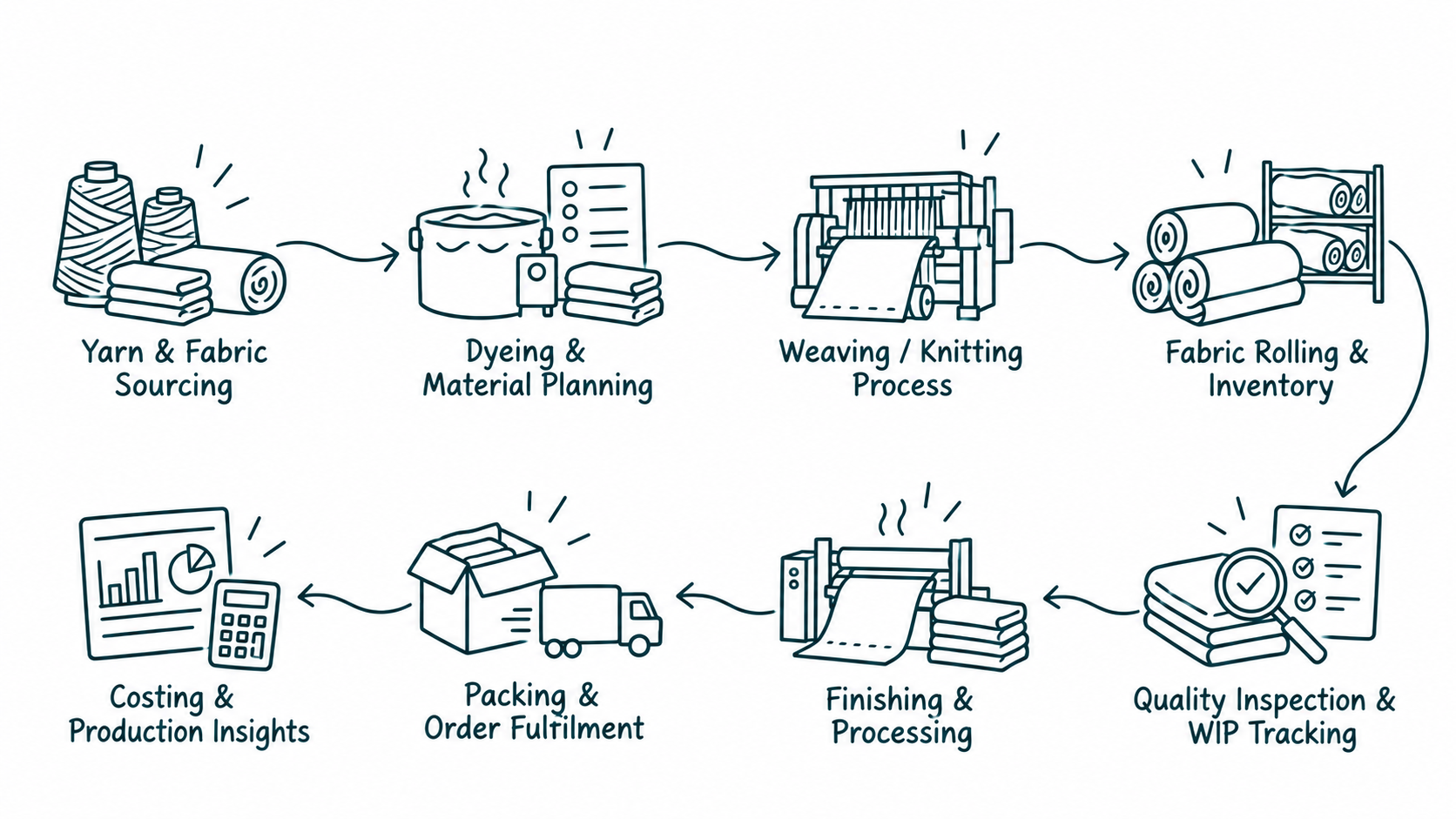
Textile and garment manufacturing involves multiple interconnected stages such as sourcing, dyeing, cutting, stitching, finishing, and quality control. Each stage depends on accurate planning, coordination, and real-time visibility.
However, many factories still rely on spreadsheets and manual coordination, leading to inefficiencies, delays, and material wastage. An Odoo-based ERP brings all operations into a single system, ensuring smoother workflows and better control across the entire production lifecycle.
Where friction builds
Lack of production visibility leads to delays, wastage, and cost overruns.
Garment manufacturers often struggle with managing fabric inventory, coordinating multiple production stages, and tracking work-in-progress across departments or job workers. Manual processes make it difficult to maintain accuracy in planning, costing, and quality control.
This results in production delays, higher fabric wastage, inconsistent quality, and reduced profitability.
Current approach
Managing production through spreadsheets and manual tracking
Using separate inventory and production systems
Tracking WIP manually across departments
Creating BOMs manually by style
Operational impact
Fabric wastage increases during cutting
Production delays grow across stages
Costing becomes inaccurate
Quality issues increase rejection rates
Inside the solution
The capabilities behind the operation.
Review the functional scope, then discuss the requirements specific to your team.
Style Master & Variant BOM
Manage styles with size-wise BOMs, measurements, and fabric consumption.
Fabric & Trim Planning
Plan materials accurately based on order quantity and design requirements.
Cutting & Marker Optimization
Improve fabric utilization with cutting plans and wastage analysis.
Production Workflow Management
Track stitching, dyeing, washing, finishing, and packing stages.
Job Work & Subcontracting
Manage outsourced production processes with full visibility and control.
WIP Tracking & Quality Control
Track work-in-progress with barcode/QR and ensure quality checks at every stage.
We build Odoo-based textile and garment ERP systems that connect procurement, production, inventory, job work, and quality into a single platform. Our approach focuses on real manufacturing workflows, ensuring better coordination, reduced wastage, and complete operational visibility.
How it connects
The complete workflow, in one view.
Make an informed decision
Is this the right fit?
The right solution starts with the right operating requirements.