Improved energy generation through timely interventions
Faster detection and resolution of faults
Higher efficiency in O&M operations
Clear and consistent performance visibility across plants
Results depend on scope, integrations and adoption.
The operating context
A clearer view of the whole operation.
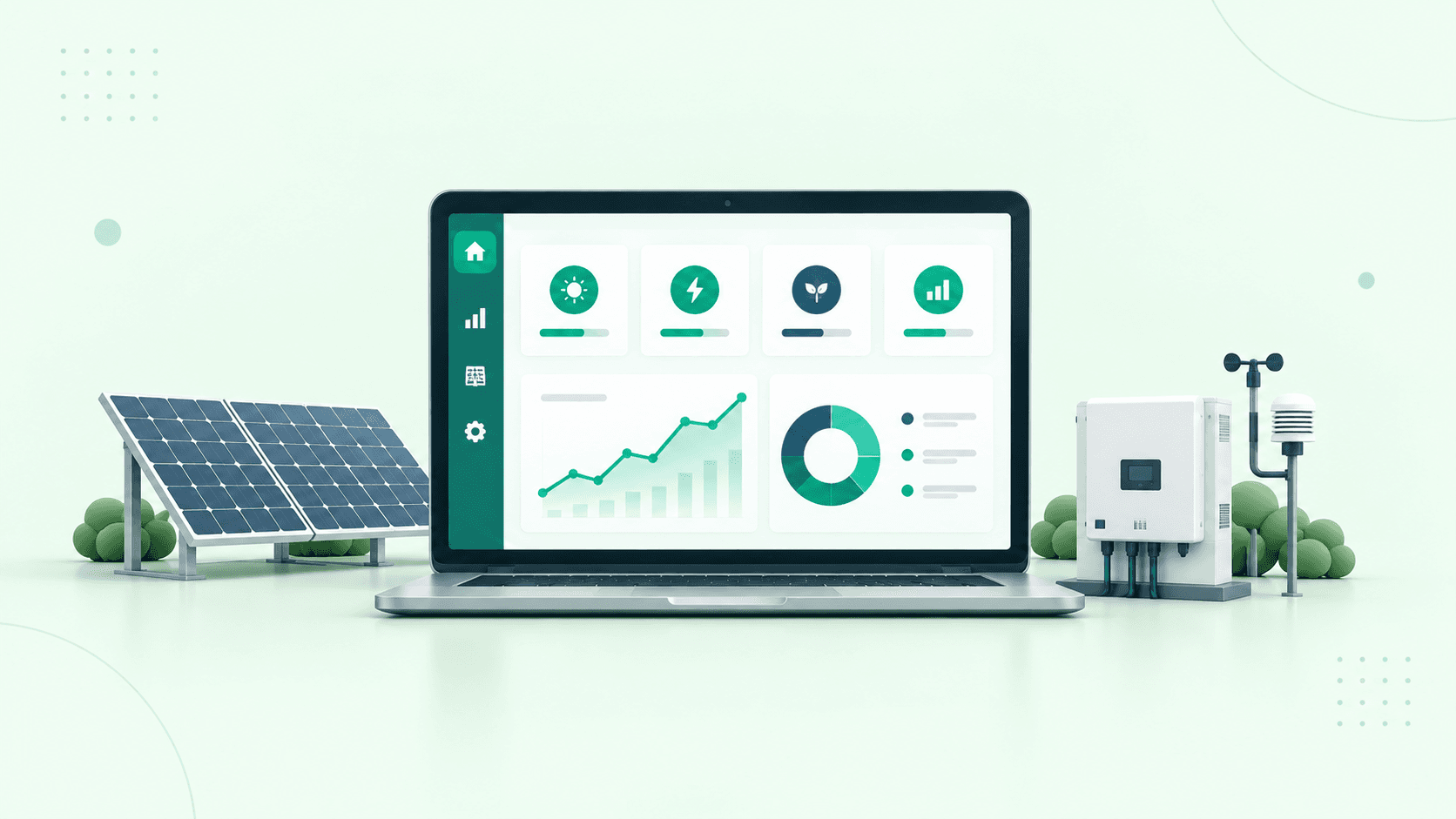
Solar plants continuously generate high-frequency data from inverters, meters, weather stations, strings, and other field devices. This data holds the key to understanding plant performance, but without structured monitoring, it remains underutilised. Operators often rely on fragmented tools or delayed reports, making it difficult to act on issues in time. A well-designed monitoring dashboard converts raw IoT data into meaningful metrics, helping teams track performance, detect anomalies early, and manage multiple plants from a single interface.
Where friction builds
Energy losses increase when solar data is not analysed in real time.
Many operators do not have a consolidated view of plant performance across devices, zones, and locations. Faults at the string or inverter level often go unnoticed until generation drops significantly. Environmental factors such as irradiance changes or panel degradation are not analysed in context, leading to missed optimisation opportunities. Manual monitoring and scattered dashboards slow down issue detection and response. Over time, these inefficiencies reduce energy output, increase operational costs, and impact overall plant returns.
Current approach
Manual tracking of generation data in spreadsheets
Separate dashboards for each device or plant
Reactive maintenance after noticeable performance drops
Limited analytics for cross-site comparison
Operational impact
Late identification of faults and inefficiencies
Lower overall energy generation
Increased time to respond to operational issues
Limited decision-making visibility for stakeholders
Inside the solution
The capabilities behind the operation.
Review the functional scope, then discuss the requirements specific to your team.
Real-Time IoT Integration
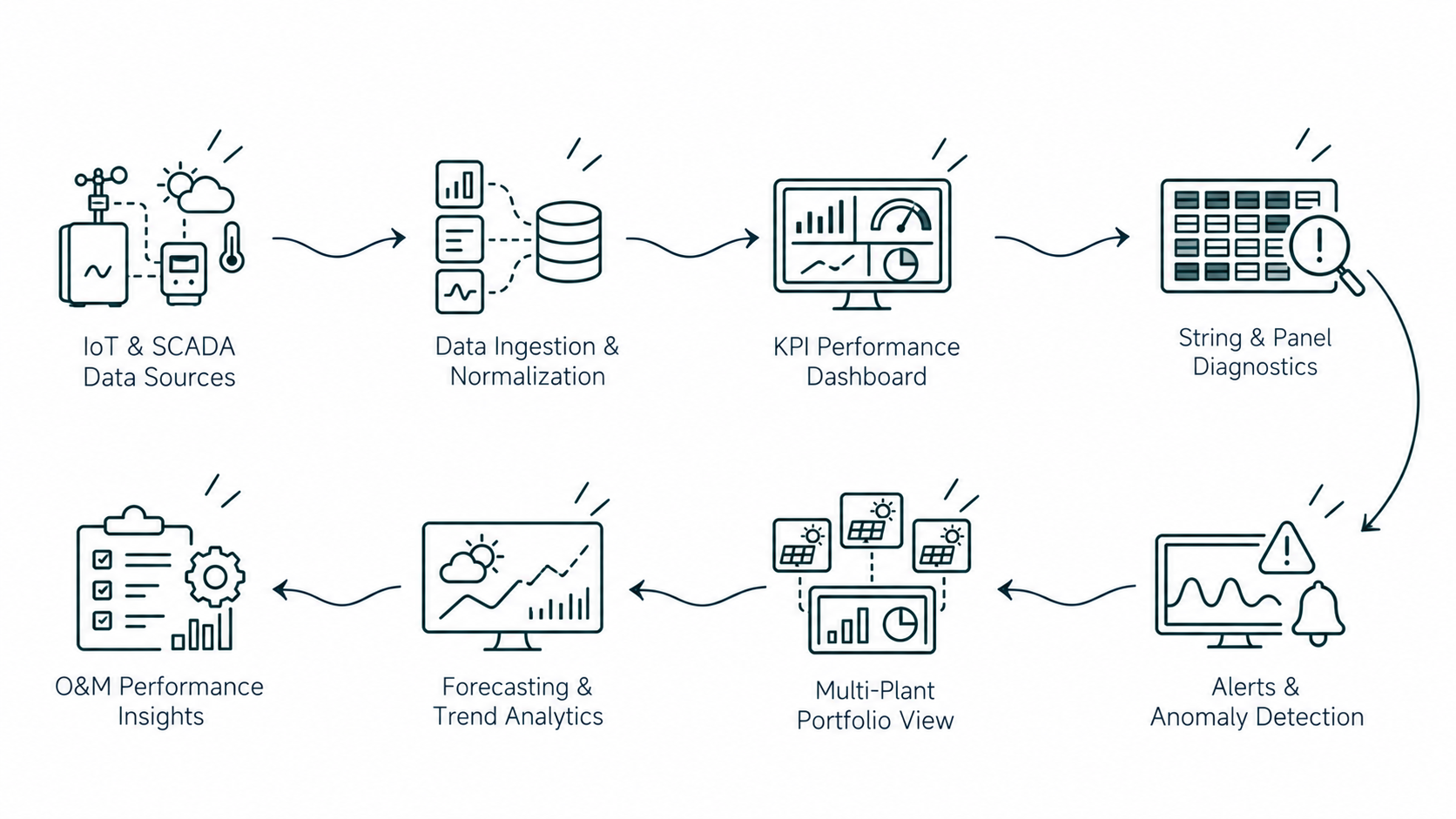
Continuously ingest data from inverters, meters, sensors, and SCADA systems into a unified platform.
Performance KPI Dashboards
Monitor key metrics such as PR, CUF, irradiance, energy yield, and inverter efficiency.
String and Panel Diagnostics
Visualise performance at string level using heatmaps to quickly identify faults and underperforming zones.
Automated Alerts and Triggers
Receive real-time notifications when performance deviates from expected thresholds.
Multi-Plant Portfolio View
Track and compare performance across multiple plants from a single dashboard.
Forecasting and Analytics
Analyse trends and predict expected generation based on weather and historical data.
Integrate and normalise IoT data from multiple sources
02
Define clear and actionable performance KPIs
03
Implement rule-based alerts and anomaly detection
04
Design dashboards for multi-site monitoring and quick decision-making
Our approach
We build solar monitoring systems that prioritise real-time visibility and operational usability. Data from inverters, SCADA systems, and sensors is integrated into a central platform with reliable ingestion and processing pipelines. We define and compute key performance indicators such as PR, CUF, and energy yield in a consistent format. Dashboards are designed for quick interpretation, highlighting deviations, trends, and faults without overwhelming operators. The system scales from single plants to large
How it connects
The complete workflow, in one view.
Make an informed decision
Is this the right fit?
The right solution starts with the right operating requirements.