Better utilization of gates, stands, staff, and equipment
Fewer resource conflicts and operational bottlenecks
Faster response to schedule changes and disruptions
Stronger airport capacity planning and operational decision making
Results depend on scope, integrations and adoption.
The operating context
A clearer view of the whole operation.
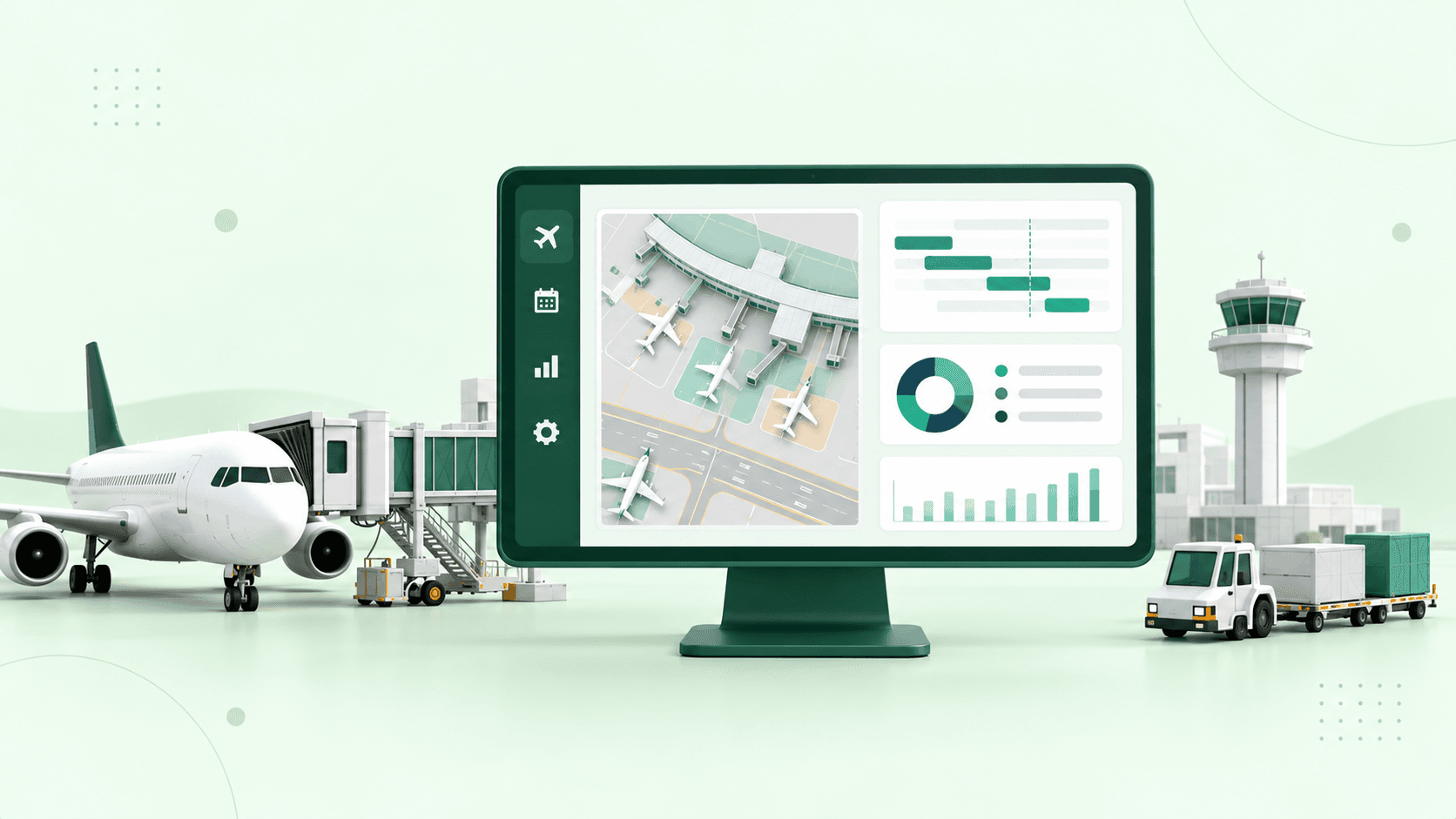
Airports must coordinate gates, stands, staff, equipment, and capacity while schedules and operating conditions keep changing. Static plans quickly lose value during delays and demand peaks. A connected planning system helps teams forecast demand, identify bottlenecks, and adjust allocations as conditions change.
Where friction builds
Why static airport capacity planning fails during disruptions
Airport capacity planning becomes difficult when schedules change, flights are delayed, demand peaks, or operational constraints shift during the day. Manual spreadsheets and fixed allocation rules make it difficult to see how one change affects gates, stands, staff, equipment, and downstream operations.
When planners lack real time visibility and scenario based planning, teams often react after conflicts have already occurred. The result can be gate clashes, resource shortages, idle capacity, avoidable delays, and inefficient use of airport infrastructure.
Current approach
Allocate resources using fixed rules and averages
Manage capacity plans through spreadsheets
Resolve gate and resource conflicts manually
Use separate scheduling and resource systems
Operational impact
Resource conflicts surface after schedule changes
Peak periods create capacity bottlenecks
Available resources remain underutilized
Planners lack downstream impact visibility
Inside the solution
The capabilities behind the operation.
Review the functional scope, then discuss the requirements specific to your team.
Airport Resource Allocation Engine
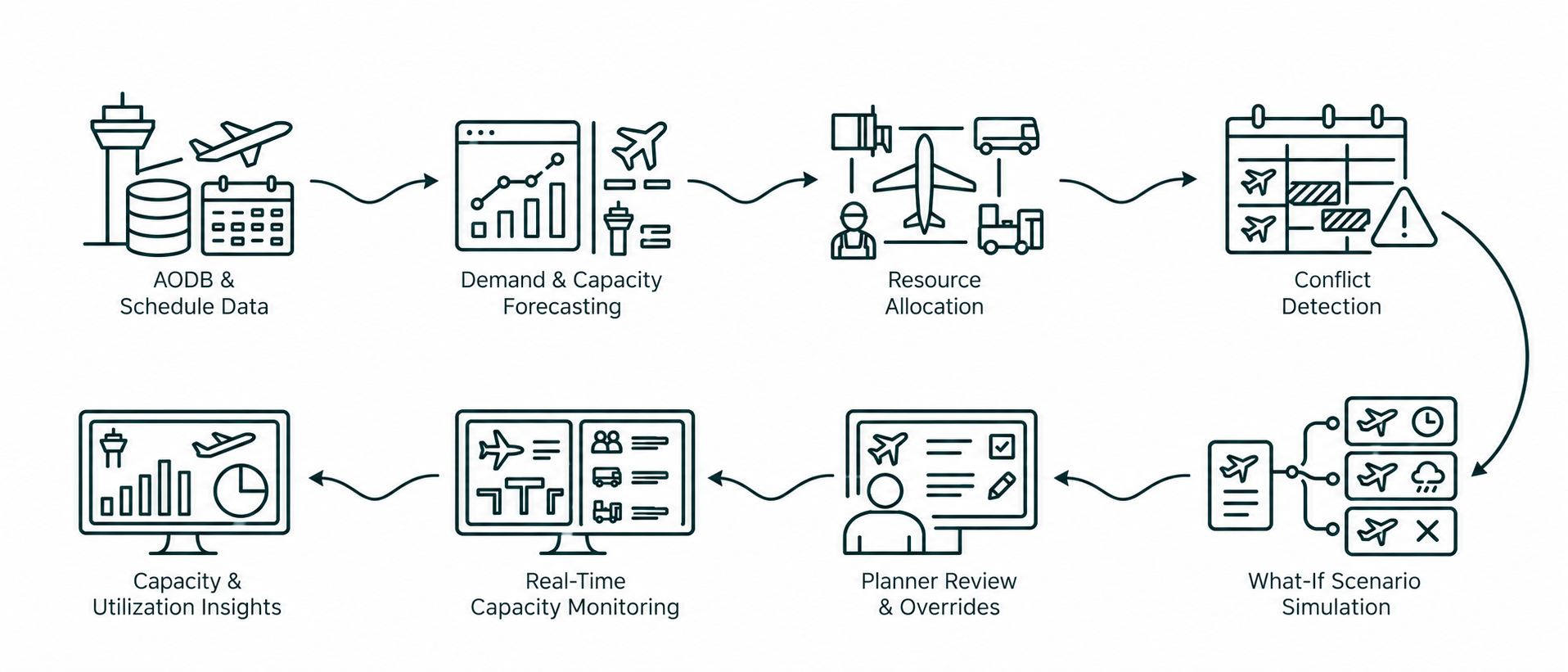
Allocate gates, stands, staff, equipment, and other resources according to schedules, operational rules, and capacity constraints.
Demand and Capacity Forecasting
Forecast resource demand using flight schedules, historical patterns, seasonal trends, and operational data.
Conflict Detection and Resolution
Identify gate, stand, staff, and equipment conflicts and support rule based resolution with controlled planner overrides.
What If Scenario Simulation
Model delays, cancellations, schedule changes, peak demand, and other disruptions before applying changes to live plans.
Real Time Capacity Dashboards
Monitor capacity, resource utilization, bottlenecks, assignments, and operational changes through centralized dashboards.
Airport System Integrations
Connect with AODB, scheduling platforms, airport operational systems, APIs, and other data sources used for capacity planning.
Map airport resources, schedules, constraints, and operational dependencies
02
Connect AODB, scheduling, and other relevant operational data sources
03
Model allocation rules, capacity constraints, and resource dependencies
04
Build forecasting, allocation, conflict detection, and scenario logic
05
Validate planning workflows with airport operations and planning teams
06
Deploy real time monitoring and controlled adjustments for changing conditions
Our approach
We build airport planning systems around real operational constraints rather than static capacity assumptions. Scheduling, resource availability, utilization, and operational conditions are combined to support allocation decisions and what if analysis. Planners can review conflicts, test alternatives, apply controlled overrides, and adjust allocations as conditions change.
How it connects
The complete workflow, in one view.
Make an informed decision
Is this the right fit?
The right solution starts with the right operating requirements.
Can the system support real time resource allocation?
Yes. Real time operational data can be used to update resource availability, identify conflicts, monitor capacity, and support adjustments as schedules and airport conditions change.
Is this suitable for both large and regional airports?
Yes. The planning architecture can be adapted to different airport sizes, traffic volumes, resource types, and operational constraints. The scope can start with a focused allocation use case and expand as planning requirements grow.
Can this integrate with existing airport systems?
Yes. The system can integrate with AODB, scheduling platforms, airport operational systems, APIs, and other data sources required for resource and capacity planning. Integration is designed around the airport's existing technology environment.
Does this support disruption and recovery planning?
Yes. Scenario simulation can model delays, cancellations, schedule changes, and capacity constraints so planners can evaluate alternative resource allocations before applying changes to operational plans.
Is the allocation logic transparent to planners?
Yes. Allocation rules, constraints, conflicts, and planner overrides can remain visible and controllable. This allows operations teams to understand why resources were assigned and adjust decisions when operational conditions require it.
Start with your requirements
Let’s define your next step.
Tell us what needs to work better, the systems you use, and the scope you have in mind.