Results depend on scope, integrations and adoption.
The operating context
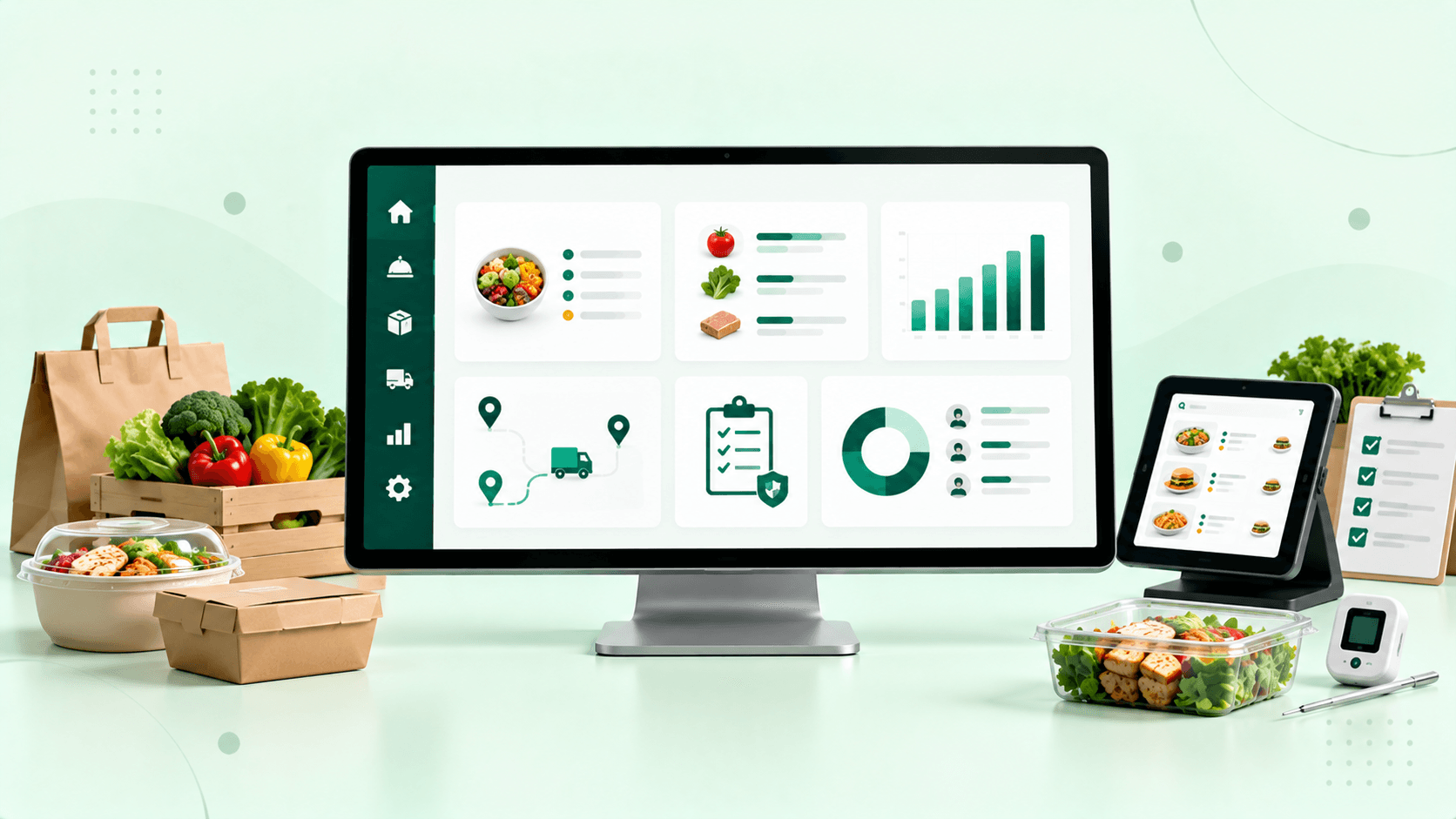
A clearer view of the whole operation.
FoodTech products combine software with real-world ordering, food operations, fulfillment, payments, and customer behavior. A useful MVP must validate the core transaction or operational workflow, not simply demonstrate screens to investors.
Where friction builds
Why foodtech MVPs struggle to gain traction
Founders often try to build full platforms too early or reduce MVPs to demo-only prototypes. Real users never touch the product, feedback is shallow, and teams burn time and capital before learning what truly matters. Regulatory and operational realities are discovered too late.
Current approach
Overbuild features before validation
Create demo-only MVPs with no real users
Ignore food safety or operational constraints early
Delay product feedback until after fundraising
Operational impact
Overbuild features before validation
Create demo-only MVPs with no real users
Ignore food safety or operational constraints early
Delay product feedback until after fundraising
Inside the solution
The capabilities behind the operation.
Review the functional scope, then discuss the requirements specific to your team.
Problem-to-MVP Definition
Clarify the core problem, user, and success criteria before writing code.
Lean MVP Architecture
Lightweight, scalable foundations that support rapid iteration.
Food Industry-Aware Design
Workflows and UX aligned with food operations, safety, and compliance needs.
Real User Feedback Loops
Instrumentation to capture usage, behavior, and early traction signals.
Pilot and Investor Readiness
MVPs structured for pilots, demos, and clear storytelling.
We build MVPs as learning tools. The goal is to test assumptions with real users, real data, and real workflows while keeping scope tight and execution fast.
How it connects
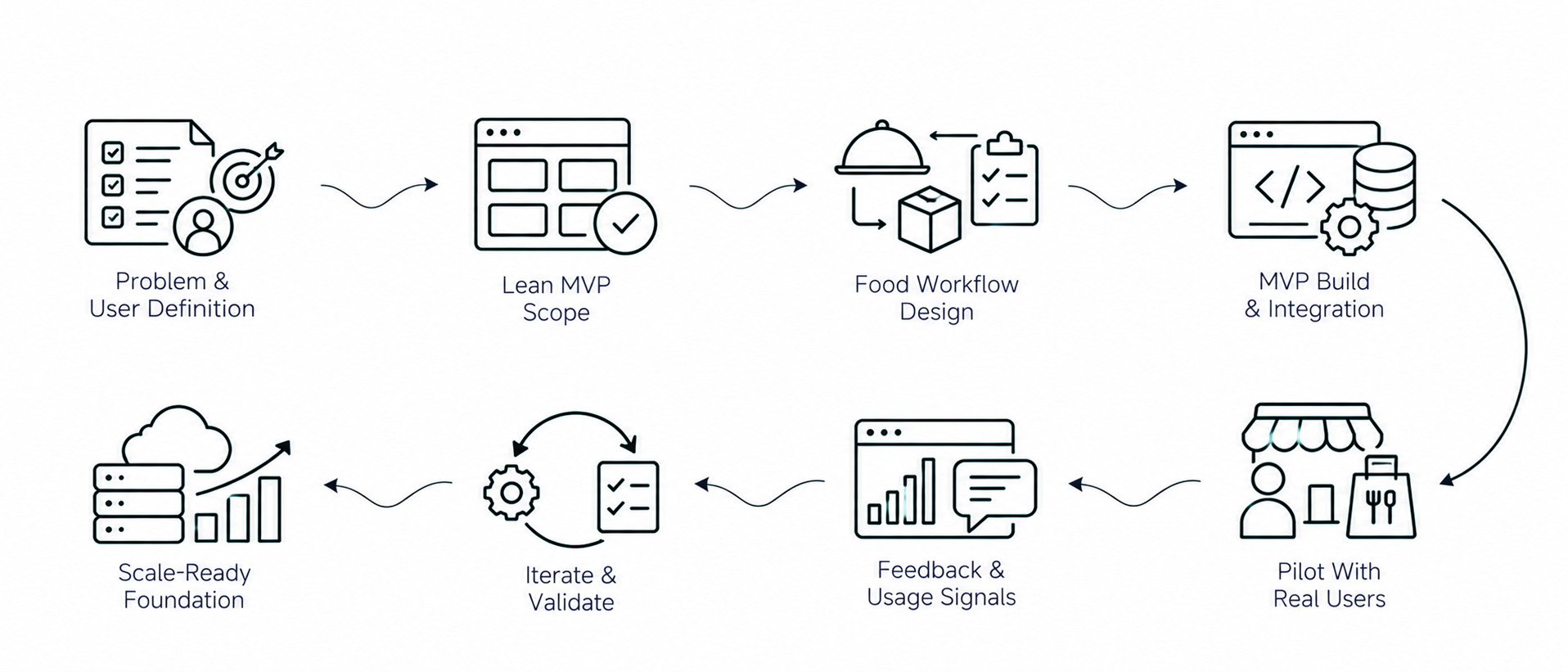
The complete workflow, in one view.
Make an informed decision
Is this the right fit?
The right solution starts with the right operating requirements.
How is foodtech MVP development different from regular startup MVPs?
Foodtech products must account for operations, safety, and real-world constraints early. We design MVPs that reflect how food businesses actually work, not just UI concepts.
Can we build an MVP even if customers are not fully defined yet?
Yes. We help narrow the target user and use case early so the MVP tests the right assumptions, not vague ideas.
Will the MVP be scalable or need a full rebuild later?
The architecture is designed to evolve. While the MVP is lean, core technical decisions are made to avoid painful rewrites.
Do you help with pilots or early customer onboarding?
Yes. MVPs are built to support pilots, onboarding, and real usage rather than staying in demo mode.
How long does a typical foodtech MVP take to build?
Most focused MVPs are delivered within a few weeks to a couple of months, depending on scope and validation goals.
Start with your requirements
Let’s define your next step.
Tell us what needs to work better, the systems you use, and the scope you have in mind.