

In this article
The travel industry has always been driven by customer experience. Whether someone is planning a family vacation, booking a business trip, organizing a group tour, or searching for the best travel package, customers expect quick answers and seamless support.
The challenge is that travel inquiries rarely arrive during business hours.
A potential customer might visit your website at 11 PM to inquire about a Dubai package. Another traveler may message your team from a different time zone asking about visa requirements. Someone else might want clarification on pricing before making a booking decision.
If these inquiries remain unanswered for hours, the customer often moves on to a competitor.
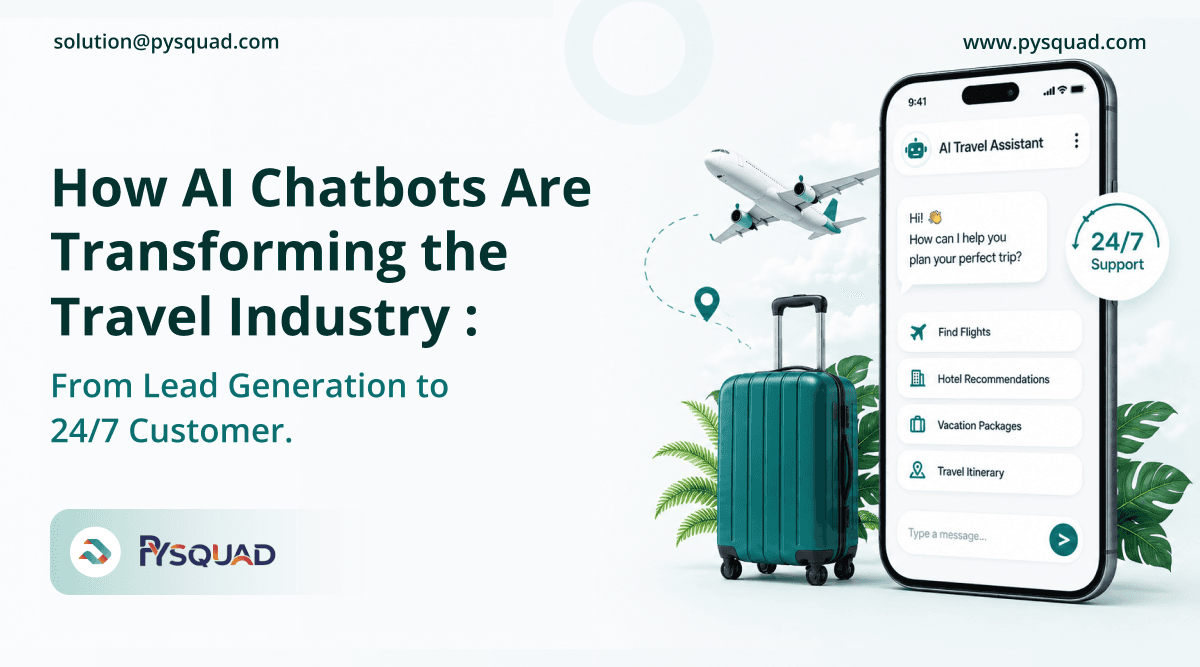
This is one of the primary reasons travel companies are increasingly adopting AI chatbots. Modern AI-powered chatbots can engage visitors instantly, answer questions, qualify leads, automate repetitive conversations, and provide support around the clock.
More importantly, they help travel businesses convert more inquiries into bookings without significantly increasing operational costs.
Why Travel Companies Need AI Chatbots
Unlike many industries, travel generates a high volume of repetitive customer questions.
Common inquiries include:
- Package details
- Pricing information
- Destination recommendations
- Hotel availability
- Visa requirements
- Travel insurance questions
- Cancellation policies
- Booking assistance
- Transportation information
Traditionally, customer support teams handled these requests manually through phone calls, emails, WhatsApp messages, and website forms.
As inquiry volumes grow, maintaining fast response times becomes increasingly difficult.
AI chatbots help solve this challenge by providing instant responses and automating a significant portion of customer interactions.
The result is a better customer experience, improved operational efficiency, and increased revenue opportunities.
The Cost of Delayed Responses in the Travel Industry
Many travel companies underestimate how much revenue is lost because of slow response times.
Consider a typical scenario:
A visitor lands on your website after searching for Bali vacation packages. They are interested and ready to explore options. However, they have a few questions about hotel availability and package inclusions.
If they don’t receive a response quickly, they simply visit another travel website.
The reality is that customers often contact multiple travel providers before making a decision.
The company that responds first frequently has a significant advantage.
An AI chatbot ensures every inquiry receives immediate attention, regardless of the time of day.
Key Benefits of AI Chatbots for Travel Companies
1. 24/7 Customer Support
Travel is a global industry.
Customers can visit your website from different countries and time zones at any hour.
AI chatbots allow businesses to provide continuous support without requiring a support team to be available around the clock.
This ensures that potential customers always receive immediate assistance.
2. Faster Lead Response Times
Research consistently shows that lead conversion rates decrease as response times increase.
An AI chatbot can engage visitors the moment they arrive on your website.
Instead of waiting hours for a response, customers receive answers instantly.
This helps travel companies capture opportunities before competitors do.
3. Improved Lead Qualification
Not every inquiry represents a serious buyer.
AI chatbots can automatically collect information such as:
- Preferred destination
- Travel dates
- Number of travelers
- Budget range
- Accommodation preferences
- Trip purpose
By gathering this information upfront, sales teams receive qualified leads rather than raw inquiries.
This allows them to focus on high-intent prospects.
4. Reduced Support Workload
Many customer questions are repetitive.
Support teams often spend hours answering the same inquiries repeatedly.
Examples include:
- What is included in the package?
- Are flights included?
- What are the cancellation terms?
- Do you offer airport transfers?
AI chatbots can handle these conversations automatically, freeing staff to focus on more complex customer needs.
5. Better Customer Experience
Modern travelers expect convenience.
They want answers immediately, not several hours later.
AI chatbots help create a smoother customer experience by providing instant assistance whenever customers need help.
Top Use Cases for AI Chatbots in the Travel Industry
Lead Generation
One of the most valuable uses of AI chatbots is lead generation.
Instead of displaying a static contact form, travel companies can engage visitors through conversational interactions.
The chatbot can ask:
- Where would you like to travel?
- When are you planning your trip?
- How many travelers are included?
- What is your approximate budget?
The collected information can then be sent directly to the sales team for follow-up.
Businesses interested in improving inquiry conversion rates can also explore AI-powered lead qualification solutions such as NIVA’s lead generation chatbot capabilities.
Destination Recommendations
Customers often begin with a general idea rather than a specific destination.
For example:
- Looking for a beach vacation
- Planning a honeymoon
- Seeking an adventure trip
- Organizing a family holiday
An AI chatbot can recommend suitable destinations based on customer preferences and help narrow down options.
This creates a more personalized experience while guiding visitors toward suitable packages.
Booking Assistance
Booking processes can sometimes feel overwhelming.
Customers may have questions about:
- Package inclusions
- Accommodation options
- Payment methods
- Cancellation policies
- Travel requirements
AI chatbots can provide guidance throughout the booking journey and reduce friction that might otherwise prevent conversions.
WhatsApp Inquiry Automation
Many travel companies receive a large percentage of inquiries through WhatsApp.
Managing hundreds of conversations manually can quickly become challenging.
AI-powered chatbots can automate initial conversations, answer frequently asked questions, collect lead information, and route qualified inquiries to human agents when needed.
Follow-Up Automation
Not every prospect books immediately.
Some customers take days or even weeks to finalize travel plans.
AI chatbots can automate follow-up communication by:
- Sharing package details
- Sending reminders
- Providing updated offers
- Re-engaging inactive prospects
This helps travel companies stay connected with potential customers throughout the decision-making process.
Post-Booking Support
Customer support should continue after a booking is completed.
Travelers frequently require assistance with:
- Itinerary information
- Hotel details
- Transportation arrangements
- Travel documentation
- Schedule updates
AI chatbots can provide instant access to this information, improving customer satisfaction while reducing support workload.
AI Chatbots During Peak Travel Seasons
Travel businesses often experience significant spikes in inquiry volume during:
- Summer vacations
- Public holidays
- Festival seasons
- Long weekends
- Promotional campaigns
During these periods, support teams can become overwhelmed.
AI chatbots provide scalability by handling hundreds of conversations simultaneously.
Unlike human teams, chatbots do not become overloaded during peak demand.
This helps maintain response quality and customer satisfaction even during busy periods.
Travel Agency vs AI Chatbot: A Practical Comparison
Many travel companies worry that AI chatbots will replace human agents.
In reality, the most effective approach combines both.
AI handles repetitive conversations while human agents focus on complex and high-value interactions.
|
Activity |
Human Team |
AI Chatbot |
|---|---|---|
|
24/7 Availability |
Limited |
Yes |
|
Instant Responses |
Limited |
Yes |
|
Lead Qualification |
Manual |
Automated |
|
FAQ Handling |
Manual |
Automated |
|
Simultaneous Conversations |
Limited |
High Volume |
|
Personalized Sales Consultation |
Excellent |
Moderate |
|
Complex Travel Planning |
Excellent |
Supportive |
The goal is not replacement.
The goal is efficiency.
What to Look for in a Travel Industry Chatbot
Not all chatbots are built for business use cases.
When evaluating solutions, travel companies should consider:
Natural Conversations
The chatbot should understand customer intent and provide human-like responses.
Multi-Channel Support
Customers interact through:
- Website chat
- Social media
A modern chatbot should support multiple communication channels.
CRM Integration
Customer data should flow directly into sales and customer management systems.
Human Handoff
Complex situations should be transferred seamlessly to human agents.
Analytics and Reporting
Businesses should be able to track:
- Lead volume
- Response times
- Conversion rates
- Customer interactions
These insights help optimize performance over time.
How NIVA Helps Travel Companies Automate Customer Interactions
As customer expectations continue to evolve, travel companies need solutions that go beyond basic FAQ bots.
NIVA is an AI-powered multi-agent business assistant platform designed to help organizations automate customer communication, lead qualification, and operational workflows.
For travel businesses, NIVA can help:
- Capture leads from website visitors
- Qualify travel inquiries automatically
- Answer customer questions instantly
- Automate follow-up conversations
- Provide 24/7 customer support
- Assist customers across multiple channels
- Reduce manual support workload
Unlike traditional rule-based chatbots, NIVA uses AI agents capable of understanding customer intent and handling more dynamic business conversations.
Travel companies looking to improve customer engagement and operational efficiency can explore NIVA’s AI chatbot capabilities at https://getniva.ai/industries/best-chatbot-for-travel-tourism/
The Future of AI in Travel
The travel industry is becoming increasingly digital.
Customers expect faster responses, personalized experiences, and support whenever they need it.
AI chatbots are helping travel companies meet these expectations while improving efficiency and scalability.
From lead generation and booking assistance to customer support and follow-up automation, AI-powered chatbots are quickly becoming an essential part of modern travel operations.
Companies that adopt these technologies today will be better positioned to deliver superior customer experiences and remain competitive in a rapidly evolving market.
Conclusion
Travel companies face a unique challenge: providing fast, accurate, and personalized support to customers across different locations and time zones.
AI chatbots help solve this challenge by delivering instant responses, qualifying leads, automating repetitive tasks, and supporting customers around the clock.
When implemented correctly, AI chatbots do more than reduce workload.
They help travel businesses increase conversions, improve customer satisfaction, and create a more scalable support operation.
As customer expectations continue to rise, AI-powered customer engagement is no longer a competitive advantage. It is rapidly becoming a business necessity.