
In this article
Natural Language Processing (NLP) has evolved rapidly, enabling machines to understand, interpret, and respond to human language. Among the various NLP libraries available, spaCy stands out for its speed, efficiency, and user-friendly features. This blog will delve into the integration of spaCy with Python, showcasing its uses, benefits across industries, and how Python development experts like PySquad can help harness its power.
Understanding spaCy
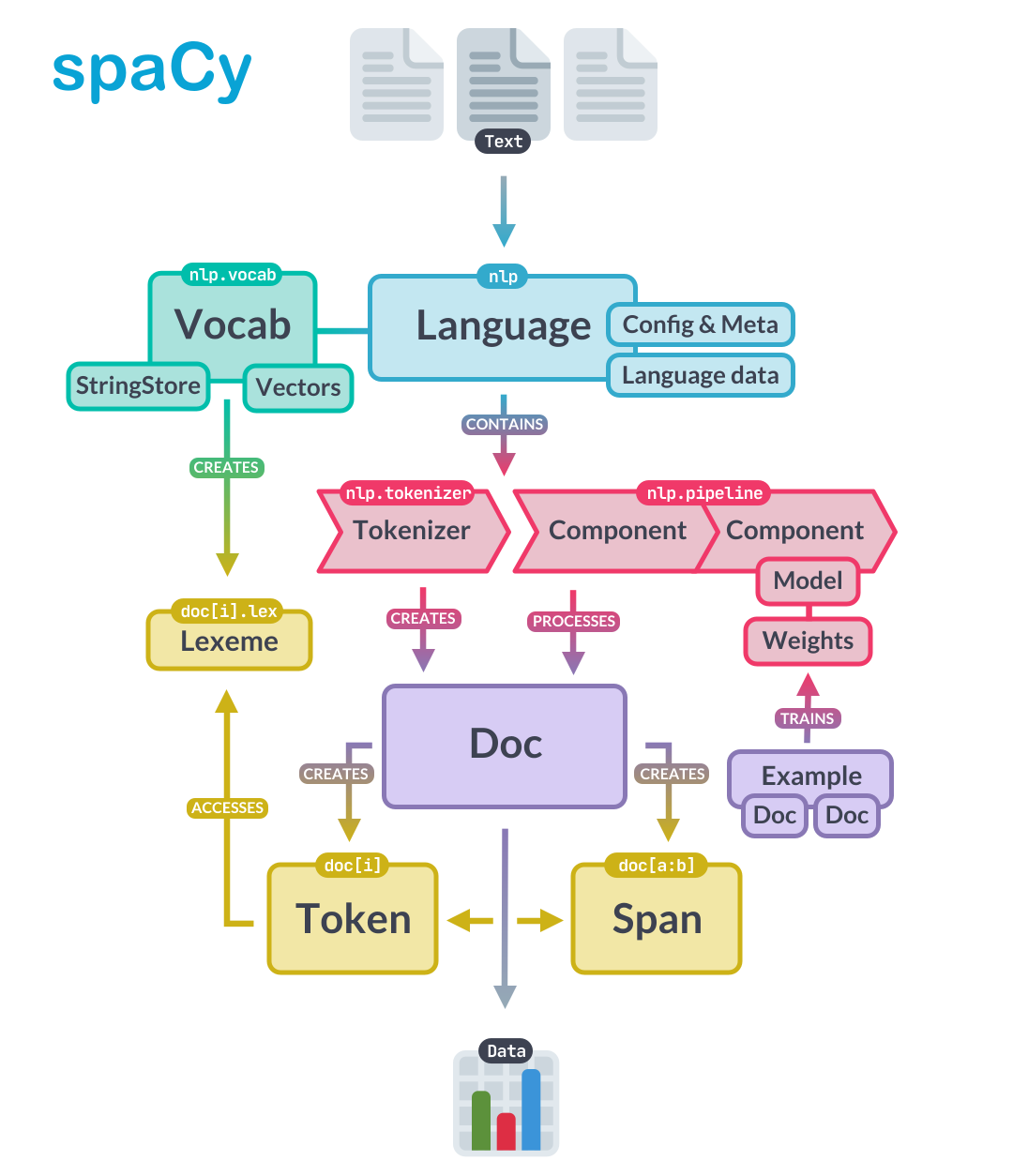
spaCy is an open-source library designed to perform various NLP tasks efficiently. Leveraging its pre-trained models, spaCy offers capabilities like tokenization, part-of-speech tagging, named entity recognition (NER), dependency parsing, and more. Its ease of use and robustness make it a go-to choice for NLP applications.
Integration with Python
Integrating spaCy with Python is straightforward. Begin by installing spaCy using pip:
pip install spacy
Once installed, download the language model you require. For instance, to download the English model:
python -m spacy download en_core_web_sm
Then, utilizing spaCy is as simple as:
import spacy

# Load the language model
nlp = spacy.load('en_core_web_sm')

# Process text
text = "spaCy makes NLP tasks easier!"
doc = nlp(text)

# Access tokens and their attributes
for token in doc:
    print(token.text, token.pos_, token.dep_)
Uses of spaCy with Python
1. Information Extraction
spaCy’s NER capabilities allow extracting entities like names, organizations, locations, and more from text, aiding in content analysis and data categorization.
for ent in doc.ents:
    print(ent.text, ent.label_)
2. Text Classification
With spaCy, you can perform text categorization tasks by training custom models or using pre-trained models for sentiment analysis, topic modeling, etc.
# Training a text classifier
from spacy.util import minibatch, compounding

# Training data preparation
# ... (code to prepare training data)

# Train the model
# ... (code to train the model
3. Dependency Parsing
Analyzing sentence structure and relationships between words is simplified with spaCy’s dependency parsing, aiding in grammar analysis or information extraction.
for token in doc:
    print(token.text, token.dep_, token.head.text, token.head.pos_)
Industries Benefiting from spaCy Integration
1. Healthcare
In healthcare, spaCy aids in extracting valuable information from medical texts, assisting in patient record analysis, and streamlining information retrieval.
2. Finance
Financial institutions utilize spaCy for sentiment analysis of market news, entity extraction for risk assessment, and compliance-related document analysis.
3. E-commerce
In e-commerce, spaCy powers recommendation systems by analyzing customer reviews, extracting product attributes, and understanding user preferences.
PySquad’s Role in Leveraging spaCy for Your Needs
PySquad, a leading Python development company, excels in harnessing spaCy’s potential for diverse applications. Their expertise in NLP and Python development ensures seamless integration and custom solutions tailored to specific business requirements. PySquad’s services encompass:
Custom NLP Solutions
Tailored NLP solutions leveraging spaCy to address specific industry challenges.
Efficient Implementation
Swift integration of spaCy into existing systems, optimizing performance and functionality.
Continuous Support
Ongoing maintenance and support to ensure the smooth functioning of spaCy-integrated applications.
References
API documentation : https://spacy.io/api
Trained Models & Pipelines : https://spacy.io/models
In conclusion, spaCy’s seamless integration with Python empowers diverse industries with efficient natural language processing solutions. With the expertise of PySquad, organizations can harness spaCy’s capabilities to optimize processes, extract insights, and drive innovation effectively.