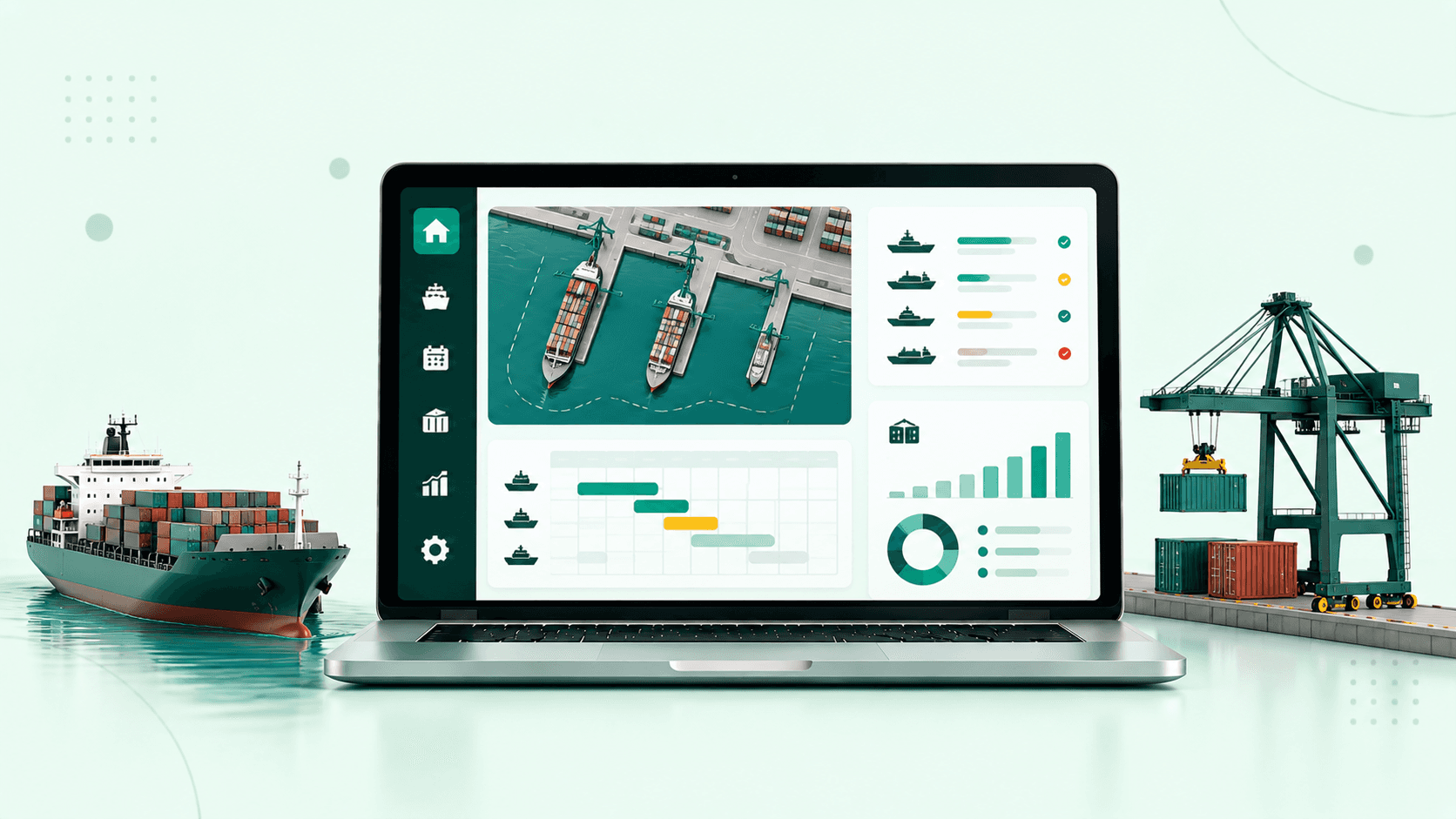
Port Authority Management System for Vessel, Berth & Terminal Operations
Port authority management system for vessel scheduling, berth allocation, terminal coordination, and maritime operations with real-time operational visibility.
Better visibility across vessel, berth, and terminal operations
Reduced scheduling conflicts and operational delays
Centralized maritime operations management
Higher terminal efficiency and resource utilization
Results depend on scope, integrations and adoption.
The operating context
A clearer view of the whole operation.
Port authorities coordinate vessel arrivals, berth allocation, terminal activities, and cargo movements across multiple stakeholders. Disconnected systems make scheduling, capacity planning, and operational reporting difficult. PySquad builds port authority management software that connects these workflows and provides visibility across maritime operations.
Where friction builds
Why port operations become difficult to coordinate
Port authorities often manage vessel schedules, berth assignments, terminal operations, cargo activities, and stakeholder communication across multiple disconnected systems. Operational data is frequently spread across spreadsheets, emails, maritime platforms, and standalone reporting tools, making coordination difficult. Without a centralized port authority management system, operations teams struggle to maintain accurate visibility into vessel movements, berth occupancy, terminal capacity, and service activities. Delays, scheduling conflicts, communication gaps, and inefficient resource allocation become more common as port traffic increases.
As ports expand across multiple terminals and operational zones, fragmented systems make it harder to optimize vessel turnaround times, maximize berth utilization, and maintain efficient maritime operations.
Current approach
Manage vessel schedules and berth assignments manually
Coordinate terminal operations through emails and phone calls
Maintain separate systems for vessel, berth, and cargo management
Rely on spreadsheets for operational reporting and planning
Operational impact
Limited visibility across vessels, berths, and terminals
Inefficient berth utilization and terminal planning
Delays caused by communication gaps and manual coordination
Difficulty responding to schedule changes and operational disruptions
Inside the solution
The capabilities behind the operation.
Review the functional scope, then discuss the requirements specific to your team.
Vessel Scheduling and Movement Management
Manage vessel arrivals, departures, operational events, movement status, and scheduling workflows through a centralized port authority management system.
Berth Allocation and Capacity Planning
Optimize berth assignments using vessel requirements, berth availability, operational constraints, and terminal capacity data.
Terminal Operations Management
Coordinate cargo activities, equipment utilization, workforce planning, and terminal workflows across one or multiple terminals.
Maritime Operations Visibility
Monitor vessel, berth, terminal, and cargo operations through real-time dashboards, alerts, and operational reporting.
Port Data Model and Entity Management
Centralize operational data for vessels, berths, terminals, cargo movements, service providers, and maritime events within a unified platform.
Integration with AIS, ERP, and Logistics Systems
Connect maritime tracking, ERP, logistics, and port management systems to create a single operational source of truth.
Scale coordination capabilities as port complexity grows
Our approach
We build port authority management systems around the core operational entities that drive port performance, including vessels, berths, terminals, cargo operations, service providers, and regulatory workflows. By connecting these activities within a unified operational platform, port authorities gain real-time visibility, stronger coordination, and better operational control.
How it connects
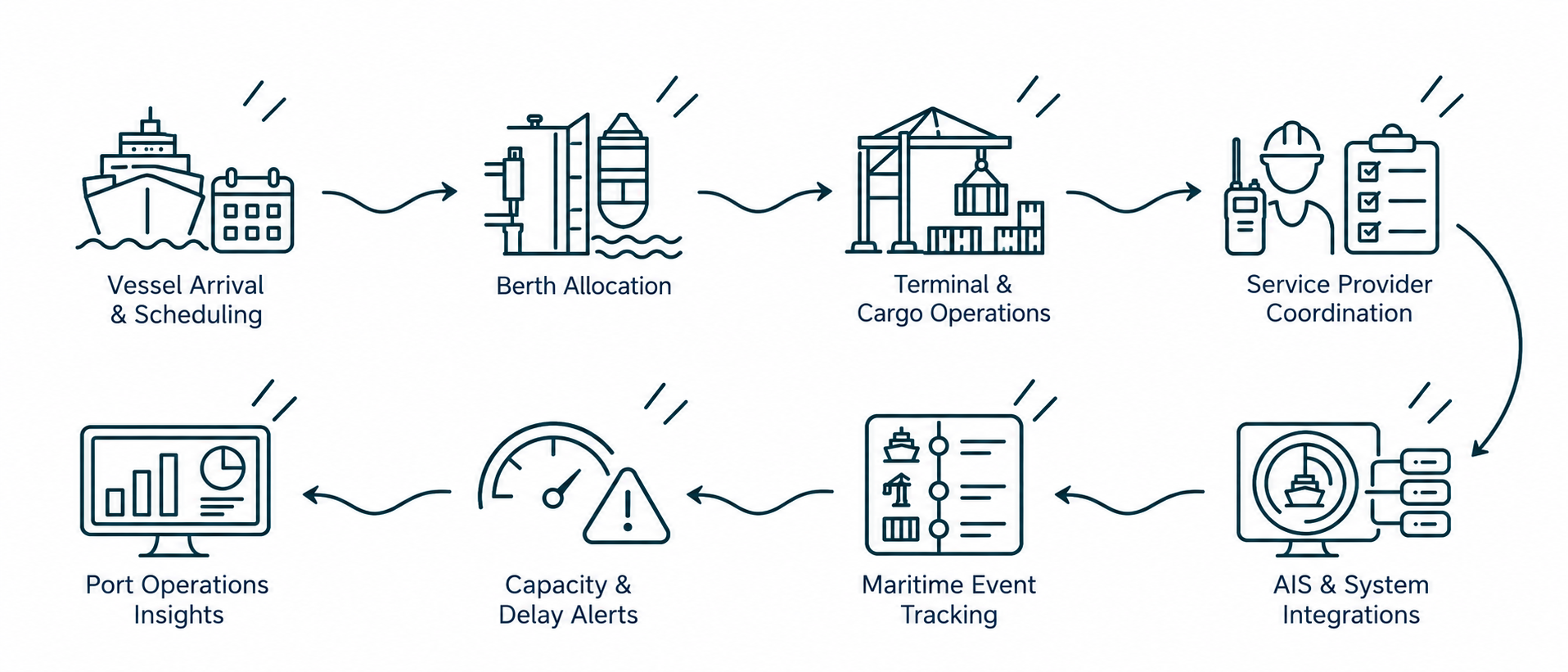
The complete workflow, in one view.
Make an informed decision
Is this the right fit?
The right solution starts with the right operating requirements.