

Order and Shipment Management
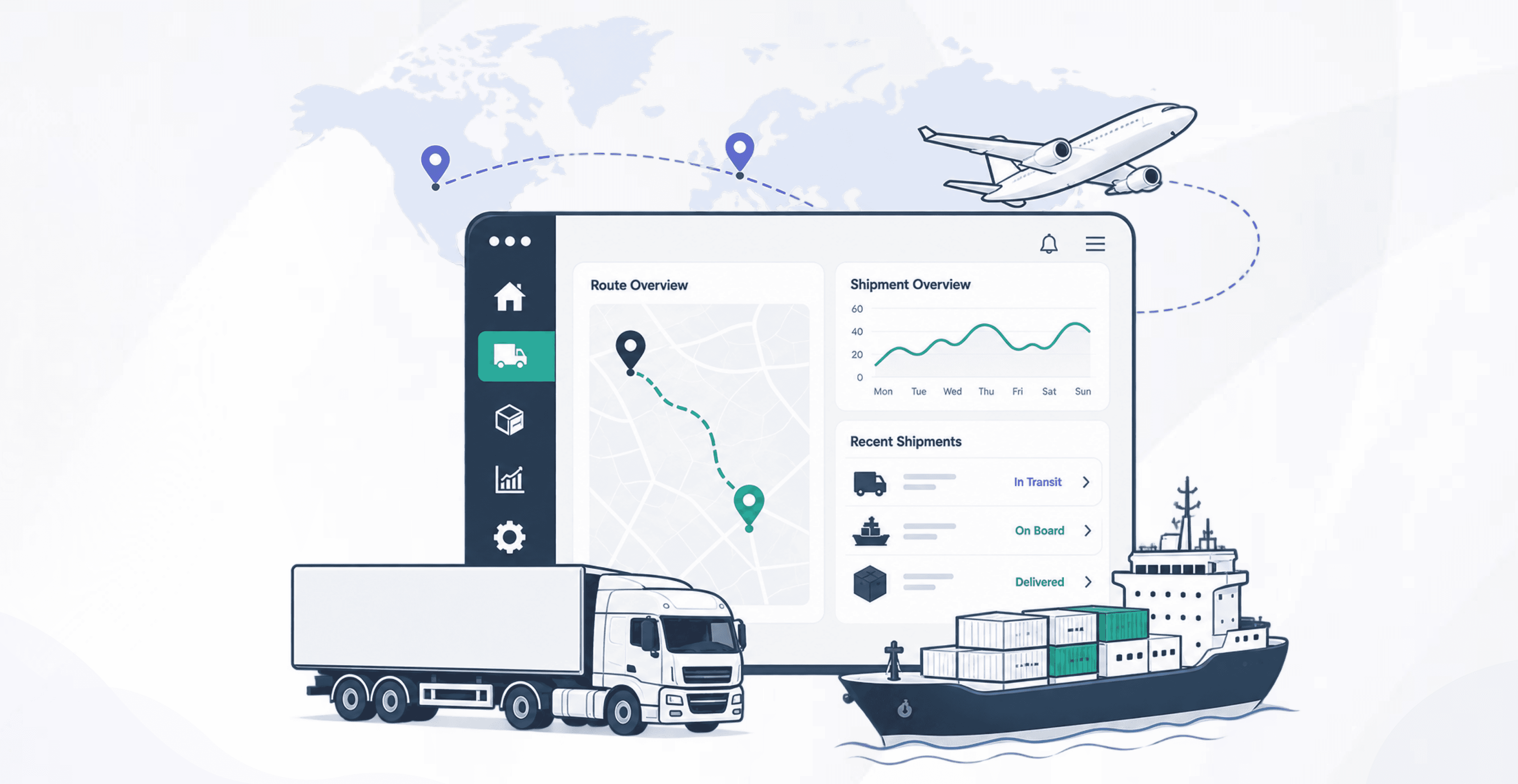
Centralised booking, dispatching, scheduling, documentation, and end-to-end shipment lifecycle management with complete operational visibility.
A fully branded, white-label TMS you can own, deploy, and scale across clients and regions.
Trusted by clients worldwide



















Transport and logistics organisations are expected to deliver faster shipments, lower transportation costs, accurate ETAs, and complete supply chain visibility while maintaining operational efficiency. As digital transformation accelerates across the logistics sector, freight operators, 3PL providers, fleet management companies, and logistics consultancies increasingly seek technology platforms they can brand, commercialise, and deploy across multiple clients without the cost, risk, and complexity of developing software internally. A white-label Transport and Logistics Management System provides a proven path to platform ownership, enabling logistics businesses to launch branded logistics technology, create new revenue streams, improve customer experience, and scale operations through a single digital ecosystem. Instead of relying on generic third-party software, organisations gain full control over workflows, integrations, user experiences, and long-term product strategy.
We work best with teams who treat software as an operating system for the business, not a one-off project.
Logistics operations struggle when systems are fragmented and ownership sits outside the business.
Many logistics teams operate with disconnected tools for orders, fleet management, tracking, and billing. This leads to limited shipment visibility, inefficient planning, delayed deliveries, and higher fuel costs. Customer-facing digital experiences are often missing or handled through third-party tools with limited flexibility. Without owning the platform, logistics businesses remain dependent on external tools that restrict customization, scalability, and long-term control. The challenge is not moving goods, but running logistics as a unified, technology-driven operation.
Common approaches
Where it falls short
Does this match your constraints?
Talk to us before you commit to another generic build.
Building blocks that keep delivery predictable under real operating load.
Centralised booking, dispatching, scheduling, documentation, and end-to-end shipment lifecycle management with complete operational visibility.
Comprehensive vehicle, driver, maintenance, compliance, utilisation, and assignment management from a single operational dashboard.
Intelligent route optimisation, distance calculations, load planning, capacity management, and fuel-efficiency improvements for better transportation performance.
GPS-enabled shipment tracking, live fleet monitoring, ETA visibility, status updates, and customer-facing tracking experiences.
Automated freight invoicing, trip-level cost analysis, rate management, margin visibility, and transportation expense control.
Complete brand ownership, custom domains, client-specific environments, role-based permissions, and scalable SaaS deployment capabilities.
Step 1
Map and design workflows around real-world logistics and transportation operations
Step 2
Build secure multi-tenant architecture suitable for commercial SaaS deployment
Step 3
Integrate GPS, ERP, accounting, telematics, and operational systems from the start
Step 4
Create customer, partner, dispatcher, and management experiences within one platform
Step 5
Prioritise real-time visibility, operational reporting, and data-driven decision-making
Step 6
Ensure scalability across fleets, warehouses, regions, customers, and business units
We build white-label logistics platforms and Transport Management Systems designed specifically for freight, transportation, fleet, and supply chain operations. Rather than adapting generic business software, we create operationally focused solutions that support shipment execution, fleet coordination, customer visibility, billing automation, and multi-tenant SaaS delivery.
What teams plan for when scope, integrations, and release are handled as one program.
Centralised control of transport, fleet, shipment, and customer operations
Improved delivery performance through enhanced planning and visibility
Reduced operational costs through route optimisation and process automation
Higher customer satisfaction with real-time tracking and self-service access
New revenue opportunities through branded white-label logistics software offerings
A scalable, future-ready logistics platform fully owned under your brand
Straight answers procurement and engineering teams ask before a build kicks off.
Yes. Full platform ownership, source code access, intellectual property rights, deployment control, and long-term product autonomy are transferred to your organisation, allowing you to operate, customise, commercialise, and scale the solution without vendor dependency.
Yes. The platform is built with multi-tenant architecture, enabling you to onboard multiple customers, manage isolated client environments, configure custom branding, and operate the solution as a scalable SaaS business.
Yes. The platform follows an API-first architecture and supports integration with GPS providers, telematics platforms, ERP systems, accounting software, warehouse management systems, customer portals, and third-party logistics tools.
Yes. The architecture is designed to support enterprise-scale logistics environments, including high shipment volumes, multi-location operations, large fleets, complex transportation workflows, advanced reporting requirements, and regional or global expansion initiatives.
The timeline depends on the complexity of workflows, integrations, user roles, and custom requirements. Most white-label logistics and TMS platforms can be launched significantly faster than building software from scratch, with phased deployment options available for faster go-to-market while maintaining scalability, security, and long-term platform ownership.
A software engineering team for complex operations. We build tools that fit how you work, not software that forces you to change everything overnight.
Discovery, build, integrations, testing, release, and follow-up once real users are in the product. You talk to engineers and leads who own the outcome.
Share scope, constraints, and timelines. We respond with a clear delivery approach, not a generic pitch deck.
Start the conversationOther areas you may want to compare.
Tell us what you are building, which systems matter, and the outcome you need. We reply within 24 hours with a clear next step.
50+ teams · Production-ready delivery · Reply within 24h
Prefer a structured brief?