Improve forecast accuracy for purchasing and production planning.
Reduce stockouts while minimizing excess inventory.
Increase procurement efficiency through automated planning decisions.
Provide better visibility across inventory, production, and supply chain operations.
Results depend on scope, integrations and adoption.
The operating context
A clearer view of the whole operation.
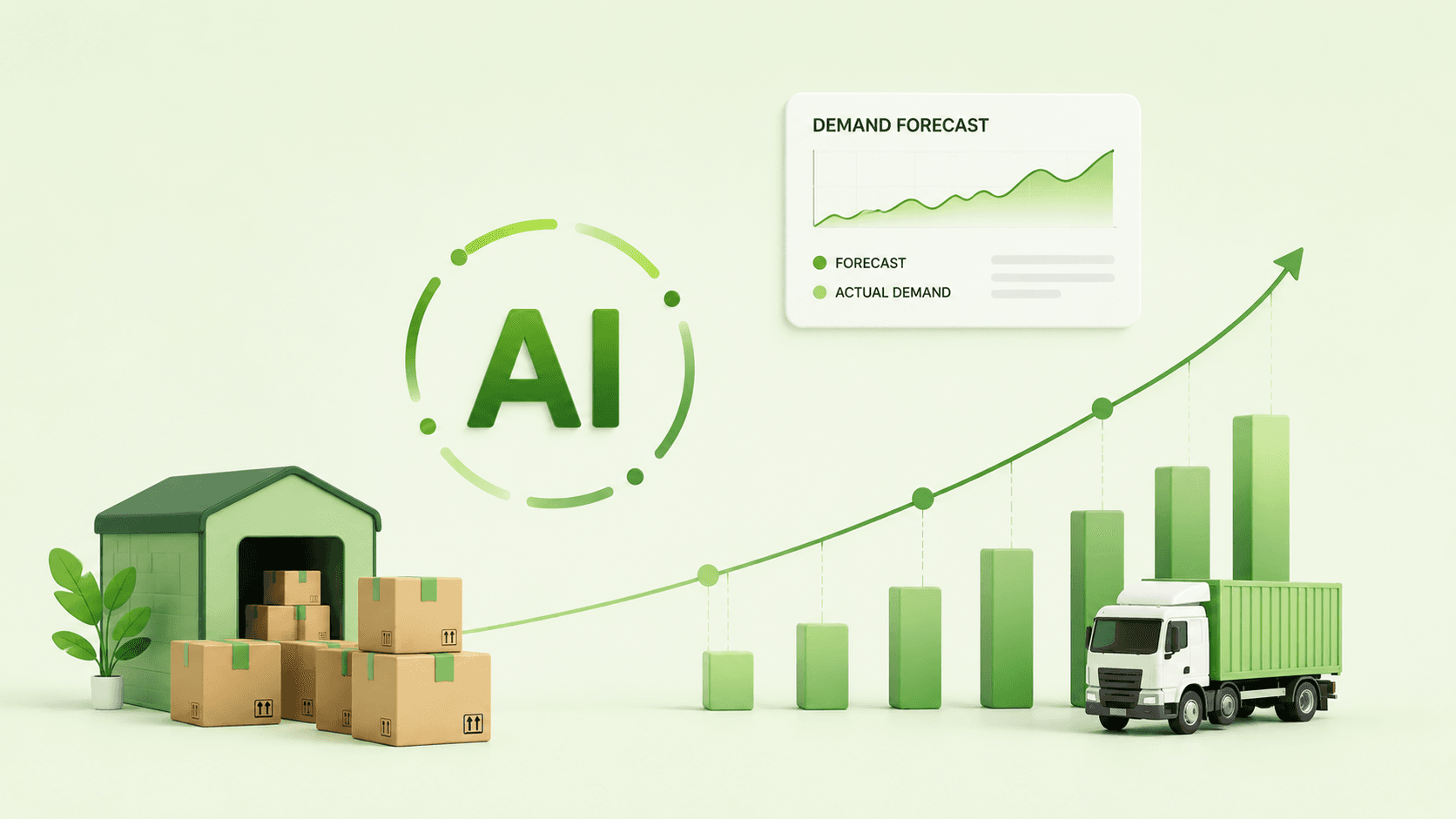
Demand uncertainty makes procurement, production, and inventory planning difficult for growing businesses. Odoo demand forecasting connects historical sales, inventory levels, supplier lead times, and production planning into one workflow, helping organizations make informed purchasing decisions, reduce inventory risk, improve forecast accuracy, and maintain consistent service levels across multiple warehouses and business units.
Many businesses still forecast demand using spreadsheets or disconnected reports, making purchasing and production decisions based on incomplete information. This often leads to stockouts, excess inventory, delayed deliveries, and higher carrying costs.
When forecasts are not connected with Odoo procurement, inventory, and MRP, planning teams struggle to react quickly to changing customer demand and supplier lead times.
Current approach
Forecast demand using spreadsheets
Estimate purchases based on previous orders
Plan inventory independently from sales forecasts
Manage production schedules manually
Track supplier lead times separately
Review inventory after shortages occur
Operational impact
Forecast accuracy declines as business complexity increases
Procurement teams react instead of planning proactively
Inventory costs rise because safety stock is poorly managed
Production schedules frequently change due to inaccurate forecasts
Warehouse replenishment becomes inconsistent across locations
Business leaders lack visibility into future inventory requirements
Inside the solution
The capabilities behind the operation.
Review the functional scope, then discuss the requirements specific to your team.
AI Assisted Demand Forecasting
Generate demand forecasts using historical sales, seasonality, trends, and configurable business rules.
Integrated Procurement Planning
Convert forecasts into purchase recommendations and procurement workflows inside Odoo.
MRP and Production Planning
Synchronize demand forecasts with manufacturing schedules, capacity planning, and material requirements.
Multi Warehouse Inventory Planning
Balance inventory across warehouses using forecast driven replenishment and stock visibility.
Safety Stock and Reorder Optimization
Automatically calculate reorder quantities and inventory buffers based on demand variability and supplier lead times.
Forecast Performance Dashboards
Monitor forecast accuracy, inventory turnover, procurement performance, and planning KPIs through interactive dashboards.
Assess historical sales patterns, inventory movement, and supplier performance.
02
Configure forecasting models aligned with your products and demand cycles.
03
Integrate forecasting with Odoo inventory, procurement, and MRP modules.
04
Build planning dashboards for planners, buyers, and operations teams.
05
Validate forecast accuracy using historical data and continuous refinement.
06
Support ongoing optimization as demand patterns and business operations evolve.
Our approach
At PySquad, we implement Odoo demand forecasting solutions that connect sales history, inventory, procurement, manufacturing, and supplier data into a unified planning environment. We configure forecasting logic based on your business model, integrate it with Odoo MRP and procurement workflows, and develop dashboards that help planners monitor forecast accuracy, inventory health, and purchasing decisions. The solution is designed to support future growth without increasing planning complexity.
How it connects
The complete workflow, in one view.
Make an informed decision
Is this the right fit?
The right solution starts with the right operating requirements.
Can Odoo demand forecasting be customized for different industries?
Yes. Forecasting models can be configured for manufacturing, wholesale, retail, healthcare, logistics, and other industries. Historical demand, seasonality, supplier lead times, and business specific rules can all be incorporated to produce forecasts that reflect your operational requirements rather than relying on generic assumptions.
How does Odoo demand forecasting improve procurement planning?
Demand forecasts can automatically influence procurement rules, reorder points, and purchase planning. By connecting forecasted demand with inventory levels and supplier lead times, purchasing teams can place orders earlier, reduce emergency buying, and maintain appropriate stock levels throughout the planning cycle.
Can Odoo demand forecasting work with manufacturing and MRP?
Yes. Forecasts can feed directly into Odoo's Master Production Schedule and Material Requirements Planning processes. This helps manufacturers align production capacity, raw material purchasing, and inventory availability with expected customer demand while reducing planning conflicts across departments.
How long does an Odoo demand forecasting implementation take?
Implementation timelines depend on data quality, product complexity, integrations, and the number of business locations. Most projects begin with data assessment, forecasting configuration, workflow integration, user validation, and performance testing before the solution is deployed into daily planning operations.
Can existing ERP or external data sources be integrated with Odoo demand forecasting?
Yes. Odoo can integrate with external ERP systems, ecommerce platforms, CRM applications, POS systems, supplier portals, and business intelligence tools. Bringing multiple data sources together improves forecast quality and provides planners with a more complete view of demand, inventory, and procurement activities.
Start with your requirements
Let’s define your next step.
Tell us what needs to work better, the systems you use, and the scope you have in mind.