Results depend on scope, integrations and adoption.
The operating context
A clearer view of the whole operation.
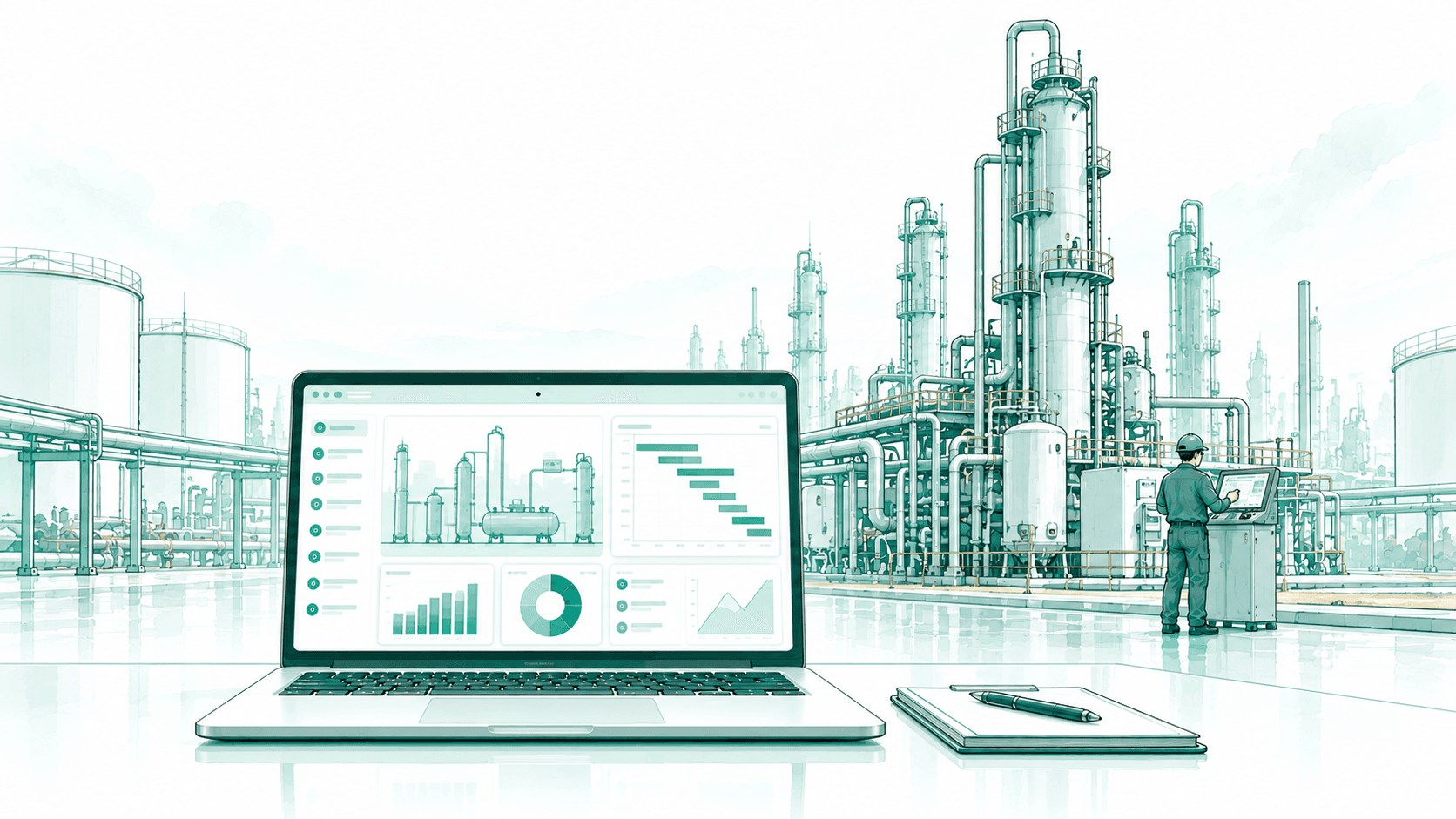
Refinery planning depends on production targets, unit constraints, process data, maintenance schedules, utilities, and operating conditions staying aligned. When this information sits across historians, spreadsheets, maintenance systems, and reporting tools, planning teams lose a consistent view of refinery execution.
Where friction builds
Disconnected refinery software systems reduce operational visibility
Refinery teams often plan production in one system while process data, maintenance status, laboratory results, and operational deviations remain elsewhere. Planners must reconcile these sources manually before understanding whether refinery units are actually performing against plan.
As conditions change, maintenance events, unit constraints, feed variations, and process deviations can quickly make the original production plan outdated. A connected operations platform should bring planning and execution data together without attempting to replace the refinery's DCS, historian, or specialized process-control systems.
Current approach
Using separate systems for operations and maintenance
Relying on manual coordination across shifts
Limited visibility into real-time unit performance
Handling incidents and deviations reactively
Operational impact
Slow response to process deviations
Poor coordination during incidents or turnarounds
Hidden energy inefficiencies
Higher operational and safety risk
Inside the solution
The capabilities behind the operation.
Review the functional scope, then discuss the requirements specific to your team.
Refinery Operations Visibility
Monitor refinery units, production activities, and operational performance through real-time dashboards and centralized refinery software.
Production Planning and Scheduling
Align refinery production targets with operational capacity through planning and scheduling tools that improve throughput and coordination.
Maintenance and Asset Management
Connect maintenance activities, asset performance, work orders, and equipment status to reduce downtime and improve reliability.
Energy and Utility Optimization
Track energy consumption, utility usage, and operational efficiency to identify optimization opportunities across refinery operations.
Operational Deviation Management
Detect process deviations, production disruptions, and operational risks early through monitoring and exception management workflows.
Compliance and Performance Reporting
Maintain audit trails, operational records, compliance documentation, and refinery performance metrics within a centralized platform.
Assess operational, maintenance, and planning workflows together
02
Integrate real-time process data with operational systems
03
Design for coordination across shifts and teams
04
Build for high availability, safety, and long-term reliability
Our approach
PySquad develops refinery software solutions tailored to the operational requirements of downstream oil and gas facilities. We connect production planning, maintenance workflows, operational monitoring, reporting, and performance management into a unified platform that improves visibility across refinery operations and supports data-driven decision making.
How it connects
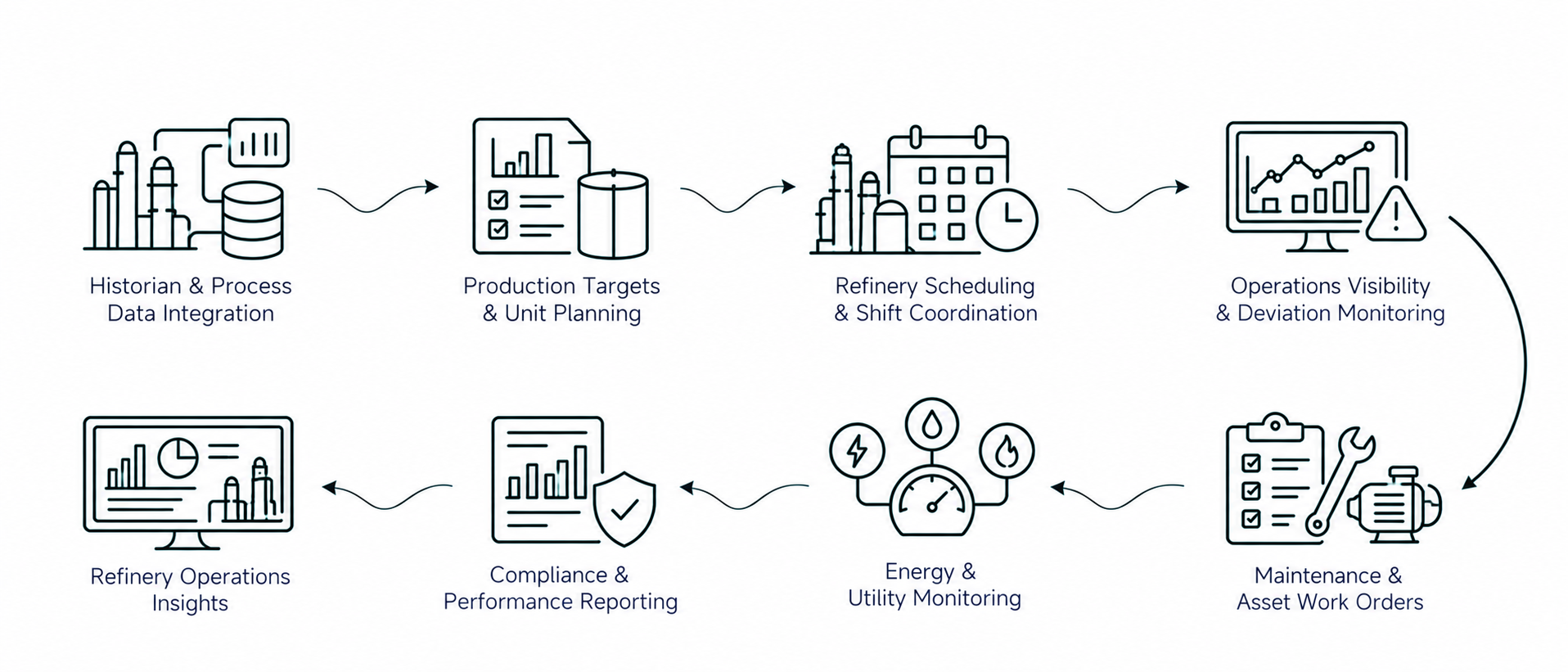
The complete workflow, in one view.
Make an informed decision
Is this the right fit?
The right solution starts with the right operating requirements.
Refinery software helps oil and gas companies manage production planning, refinery operations, maintenance activities, scheduling, compliance, and performance monitoring within a centralized platform.
How does refinery software improve refinery operations?
Refinery software provides real-time visibility into production activities, equipment performance, operational deviations, and planning processes, helping operators improve efficiency and decision making.
Can refinery software integrate with existing refinery systems?
Yes. Modern refinery software can integrate with process control systems, maintenance platforms, ERP solutions, production databases, and operational reporting tools.
What features should refinery software include?
Key features include production planning, refinery scheduling, maintenance management, operational monitoring, compliance reporting, energy management, and performance analytics.
Is refinery software suitable for downstream oil and gas operations?
Yes. Refinery software is commonly used by downstream operators to improve production visibility, optimize throughput, coordinate maintenance activities, and support operational efficiency.
Start with your requirements
Let’s define your next step.
Tell us what needs to work better, the systems you use, and the scope you have in mind.