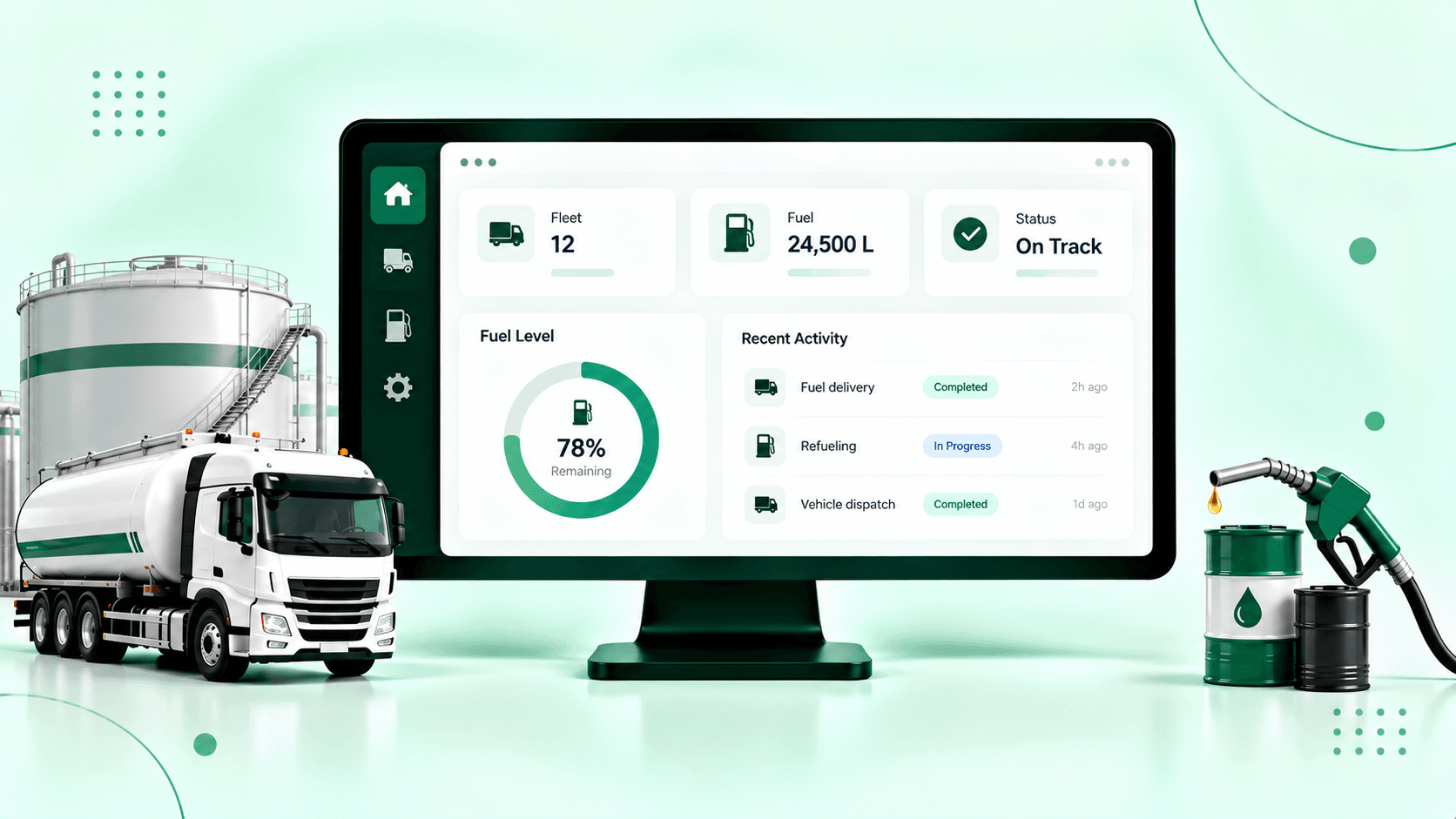
Petroleum Logistics Software for Fuel Distribution & Supply Chain Visibility
Petroleum logistics solutions by PySquad improve shipment visibility, fuel distribution tracking, compliance, and delivery control across energy networks.
Results depend on scope, integrations and adoption.
The operating context
A clearer view of the whole operation.
Petroleum logistics solutions have become critical as fuel distributors face tighter compliance requirements, rising transportation costs, and increasing pressure to maintain uninterrupted supply. US energy companies need real time visibility across terminals, transport fleets, depots, and delivery networks. Manual coordination and disconnected systems create operational risk and reduce control over fuel distribution.
Where friction builds
Fuel distribution delays create compliance and delivery risks
Petroleum operators manage hazardous fuel transportation across terminals, tank farms, storage facilities, carriers, and customer delivery networks. Many organizations rely on disconnected transportation tools, spreadsheets, and manual reporting processes that limit operational visibility. Without petroleum logistics software, logistics teams often struggle to monitor shipment status, fuel inventory movement, route exceptions, proof of delivery events, and compliance requirements in real time.
As fuel distribution networks grow, delayed information creates inventory discrepancies, missed deliveries, compliance risks, and increased transportation costs. Operations teams spend valuable time gathering updates instead of actively managing petroleum transportation performance.
Current approach
Track fuel shipments in spreadsheets
Use separate transport and inventory systems
Depend on calls for updates
Handle delivery exceptions manually
Operational impact
Shipment visibility remains limited
Delivery issues surface too late
Compliance reporting stays manual
Fuel distribution teams stay disconnected
Inside the solution
The capabilities behind the operation.
Review the functional scope, then discuss the requirements specific to your team.
Real-Time Petroleum Shipment Visibility
Track fuel shipments across terminals, depots, transport fleets, and delivery locations using petroleum logistics software that provides real-time operational visibility and transportation monitoring.
Fuel Transportation Route Planning
Improve fuel transportation management with route planning capabilities that support safety requirements, delivery schedules, regulatory restrictions, and operational efficiency goals.
Terminal and Depot Integration
Connect terminal operations, depot workflows, inventory systems, and transportation data to create a unified petroleum supply chain management environment.
Logistics Exception Management
Detect shipment delays, route deviations, delivery incidents, and operational disruptions early through automated monitoring and exception workflows.
Petroleum Compliance Reporting
Maintain transportation records, audit trails, shipment documentation, and reporting requirements needed for petroleum logistics compliance and operational oversight.
Distribution Performance Analytics
Measure fuel distribution performance, fleet utilization, delivery efficiency, and transportation KPIs through centralized logistics dashboards.
PySquad designs petroleum logistics software solutions that connect fuel distribution operations, transportation workflows, inventory visibility, compliance tracking, and reporting into a single operational platform. We begin by mapping petroleum supply chain processes across terminals, transport providers, depots, dispatch teams, and compliance stakeholders.
How it connects
The complete workflow, in one view.
Make an informed decision
Is this the right fit?
The right solution starts with the right operating requirements.
Petroleum logistics software helps fuel distributors, refiners, and energy companies manage transportation, shipment tracking, inventory visibility, compliance reporting, route planning, and fuel delivery operations. Unlike general logistics platforms, petroleum logistics software supports hazardous material transportation and provides operational visibility across the petroleum supply chain.
Why is real time visibility important in petroleum logistics?
Real time visibility allows logistics teams to track fuel shipments, identify delays, monitor route deviations, and respond to incidents quickly. In fuel distribution software environments, visibility helps reduce operational risk, improve customer communication, and maintain control across complex transportation networks.
Can petroleum logistics software integrate with terminal and depot systems?
Yes. Modern petroleum logistics software can connect with terminal operations, depot management systems, inventory platforms, and transportation tools. These integrations help maintain accurate shipment status, custody records, inventory updates, and distribution reporting without relying on manual data entry.
How does route optimization help fuel distribution companies?
Route optimization helps fuel transportation management teams reduce unnecessary mileage, improve delivery schedules, and comply with transportation restrictions. By considering safety requirements, route constraints, and operational priorities, companies can lower transportation costs while maintaining reliable service levels.
Is petroleum logistics software suitable for large distribution networks?
Yes. Petroleum logistics solutions are designed to support regional and national fuel distribution operations. They can manage multiple terminals, carriers, depots, and delivery locations while providing centralized visibility across the entire fuel distribution management system and transportation network.
Start with your requirements
Let’s define your next step.
Tell us what needs to work better, the systems you use, and the scope you have in mind.