Results depend on scope, integrations and adoption.
The operating context
A clearer view of the whole operation.
AI price recommendation system adoption is rising as US marketplaces face tighter margins, volatile demand, and increasing seller competition. Teams that still rely on spreadsheets or static pricing rules struggle to react to market changes fast enough. Buyers expect competitive pricing, while operators need to protect profitability and marketplace growth.
Many US marketplace operators still depend on manual pricing reviews, static markups, or seller intuition. These methods break down when product catalogs grow, competitor pricing changes daily, or demand fluctuates across regions and seasons. Teams often lack a reliable way to balance competitiveness and profitability at scale.
When pricing decisions are inconsistent, sellers lose confidence, conversion rates decline, and margin erosion becomes difficult to detect. Operations teams spend hours investigating performance drops while leadership lacks clear visibility into whether pricing strategy is helping or hurting marketplace revenue.
Current approach
Review prices manually
Apply fixed markup rules
Let sellers price independently
Copy competitor prices directly
Operational impact
Price changes happen too late
Margins erode unnoticed
Seller pricing becomes inconsistent
Demand signals stay underused
Inside the solution
The capabilities behind the operation.
Review the functional scope, then discuss the requirements specific to your team.
Dynamic pricing recommendations
Generate pricing suggestions based on demand, competition, and marketplace performance data.
Demand forecasting engine
Predict future demand patterns to support more informed pricing decisions.
Seller pricing intelligence
Provide sellers with guidance that improves consistency across the marketplace.
Margin protection controls
Prevent recommendations that fall below predefined profitability thresholds.
Real time recommendation APIs
Integrate pricing intelligence directly into marketplace workflows and applications.
Performance feedback monitoring
Track recommendation outcomes and improve model accuracy over time.
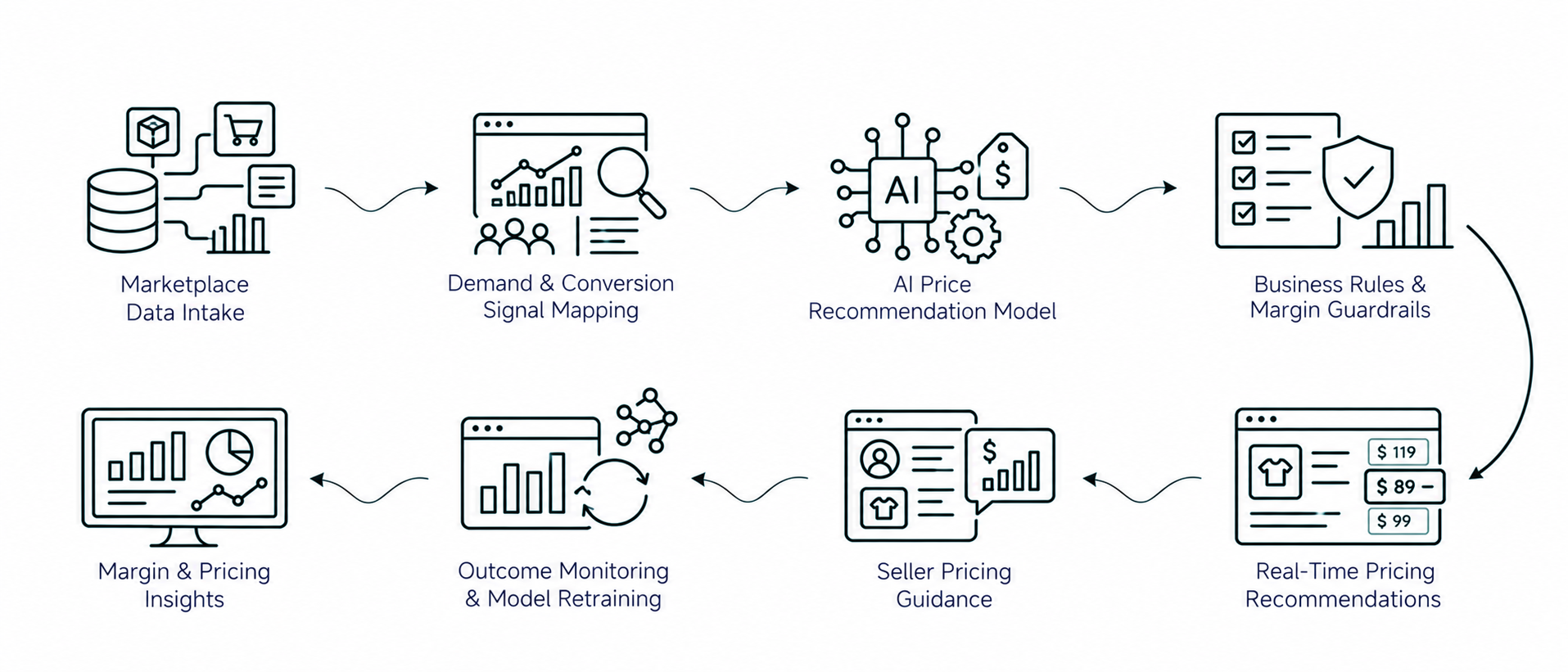
PySquad starts by analyzing marketplace transaction history, catalog structure, seller behavior, inventory signals, and external market data. We identify the pricing factors that influence conversions and margins, train recommendation models using historical outcomes, validate recommendations against business rules, and deploy decision engines through APIs or marketplace dashboards.
How it connects
The complete workflow, in one view.
Make an informed decision
Is this the right fit?
The right solution starts with the right operating requirements.
How does an AI price recommendation system work for marketplaces?
An AI price recommendation system analyzes historical transactions, demand patterns, inventory signals, competitor pricing, and buyer behavior. The model identifies pricing ranges that balance competitiveness and profitability. Instead of relying on static rules, dynamic pricing recommendations adapt as marketplace conditions change, helping operators make faster and more consistent pricing decisions.
Can AI pricing recommendations increase marketplace revenue?
Yes, when implemented correctly. Revenue gains typically come from identifying products that are underpriced, improving conversion rates on overpriced listings, and responding faster to market changes. A marketplace pricing engine helps operators make decisions using data rather than assumptions, which often improves both sales performance and margin visibility.
What data is needed to build a price recommendation platform?
Most projects use transaction history, product catalog data, inventory information, seller activity, pricing history, and customer behavior metrics. Additional signals such as competitor pricing and seasonal demand data can improve recommendation quality. The accuracy of predictive pricing models generally improves when reliable historical marketplace data is available.
How long does it take to implement an AI pricing solution?
Implementation timelines depend on marketplace complexity, data quality, and integration requirements. Many projects begin with data assessment and model development before moving into API integration and testing. For most US marketplaces, an initial AI pricing recommendation system can be deployed within a few months and refined continuously afterward.
Can pricing recommendations be controlled by business rules?
Yes. Most marketplace operators want recommendations that respect margin thresholds, category restrictions, seller agreements, and pricing policies. PySquad builds pricing optimization systems that combine machine learning recommendations with configurable business controls, allowing teams to maintain oversight while benefiting from automated pricing intelligence.
Start with your requirements
Let’s define your next step.
Tell us what needs to work better, the systems you use, and the scope you have in mind.